
The allure of gold and silver has captivated investors for centuries. These precious metals, historically used as currency and stores of value, now play a significant role in diverse investment portfolios. Their price movements, influenced by a complex interplay of macroeconomic factors, geopolitical events, and market sentiment, offer both substantial opportunities and considerable risks. This exploration delves into the intricacies of gold and silver commodities trading, examining strategies, risk management, and the regulatory landscape that shapes this dynamic market.
Understanding the historical performance of gold and silver against other asset classes is crucial for informed investment decisions. We’ll analyze the factors driving price fluctuations, from inflation and interest rates to global political instability. Furthermore, we’ll explore various trading strategies, ranging from long-term buy-and-hold approaches to more active short-term trading techniques, emphasizing the importance of technical and fundamental analysis in navigating this complex market.
Market Overview of Gold and Silver
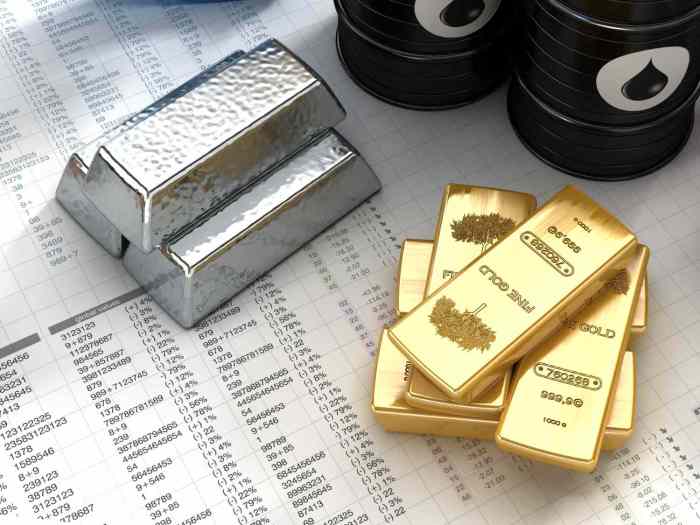
Gold and silver, precious metals with a rich history, have served as stores of value and mediums of exchange for millennia. Their price movements, however, are far from static, influenced by a complex interplay of economic and geopolitical factors. Understanding these dynamics is crucial for anyone considering investment in these commodities.Gold and silver prices have experienced significant fluctuations throughout history.
Periods of economic uncertainty, inflation, and geopolitical instability have often driven prices higher, while periods of economic growth and rising interest rates have sometimes led to price declines. For example, the price of gold surged during the 1970s amidst high inflation and the collapse of the Bretton Woods system, while the 2008 financial crisis also triggered a significant price increase.
Conversely, periods of strong economic growth have sometimes seen gold prices fall as investors shifted towards higher-yielding assets.
Factors Influencing Gold and Silver Prices
Several key factors influence the price movements of gold and silver. Inflation, often considered a hedge against inflation, tends to increase demand for both metals as investors seek to protect their purchasing power. Interest rates also play a significant role; higher interest rates generally increase the opportunity cost of holding non-yielding assets like gold and silver, potentially reducing demand.
Geopolitical events, such as wars, political instability, and trade disputes, often drive safe-haven demand for gold, leading to price increases. Currency fluctuations, particularly the US dollar, also impact prices, as gold is typically priced in US dollars. A weaker dollar generally makes gold more attractive to international investors.
Investment Characteristics of Gold and Silver
Gold and silver are often considered alternative investments, offering diversification benefits to portfolios heavily weighted in stocks and bonds. Gold is generally viewed as a more conservative investment, with lower volatility than silver. Silver, however, exhibits higher volatility, offering the potential for greater returns but also higher risk. While historically correlated, their correlation is not perfect; silver prices can sometimes outperform gold during periods of industrial growth, reflecting its use in various industrial applications.
Historical Performance Comparison
The following table illustrates the historical performance of gold and silver against a broad market index (S&P 500). Note that past performance is not indicative of future results. This data is for illustrative purposes only and should not be considered financial advice.
| Year | Gold Price (USD/oz) | Silver Price (USD/oz) | S&P 500 Index |
|---|---|---|---|
| 2010 | 1224.53 | 17.96 | 1115.10 |
| 2015 | 1060.00 | 15.00 | 2043.94 |
| 2020 | 1895.00 | 26.00 | 3756.07 |
| 2022 | 1800.00 (approx.) | 19.00 (approx.) | 3900.00 (approx.) |
Trading Strategies for Gold and Silver
Trading gold and silver presents a unique set of opportunities, driven by their roles as safe-haven assets and industrial metals. Successful trading hinges on understanding various strategies, adapting to market conditions, and employing robust risk management techniques. The choice of strategy depends largely on individual investment goals, risk tolerance, and time horizon.
Long-Term Investing in Gold and Silver
Long-term investing in gold and silver is a strategy often employed by those seeking to diversify their portfolios and protect against inflation. This approach typically involves buying and holding the assets for an extended period, often several years or even decades. The strategy relies on the historical tendency of precious metals to appreciate over the long run, particularly during periods of economic uncertainty or inflation.
Investors may choose to hold physical gold and silver, or invest through exchange-traded funds (ETFs) or mining company stocks. This approach minimizes the impact of short-term market fluctuations. For example, an investor might allocate a portion of their portfolio to gold ETFs as a hedge against inflation, expecting gradual appreciation over a 10-20 year timeframe.
Short-Term Trading of Gold and Silver
Short-term trading, also known as day trading or swing trading, focuses on capitalizing on short-term price movements. This strategy requires active monitoring of market trends and the use of technical analysis indicators to identify potential entry and exit points. Traders often use leverage to amplify their returns, but this also increases risk significantly. Successful short-term trading depends on the ability to accurately predict near-term price fluctuations.
For instance, a day trader might exploit intraday price volatility in gold futures contracts, aiming for small but frequent profits. This high-frequency trading approach requires sophisticated tools and a high degree of market awareness.
Hedging with Gold and Silver
Hedging is a risk management strategy that involves using gold and silver to offset potential losses in other investments. Investors often use gold as a hedge against inflation and currency devaluation, while silver can act as a hedge against industrial metal price fluctuations. This strategy aims to reduce overall portfolio volatility and protect against adverse market events. For example, a portfolio manager holding a large position in equities might allocate a portion of the portfolio to gold to mitigate potential losses during a market downturn.
This strategy isn’t designed for profit generation but rather for risk mitigation.
Technical Analysis Indicators in Gold and Silver Trading
Technical analysis involves using charts and indicators to identify trends and predict future price movements. Several popular indicators are commonly used in gold and silver trading. The Relative Strength Index (RSI) helps identify overbought and oversold conditions, while moving averages (e.g., 50-day and 200-day) provide insight into the prevailing trend. Other indicators include MACD (Moving Average Convergence Divergence), Bollinger Bands, and stochastic oscillators.
These tools help traders identify potential entry and exit points based on price patterns and momentum. For instance, a trader might use the RSI to confirm a potential buy signal when the indicator falls below 30, suggesting an oversold condition.
Fundamental Analysis in Gold and Silver Price Prediction
Fundamental analysis focuses on macroeconomic factors that influence gold and silver prices. These factors include inflation rates, interest rates, geopolitical events, and industrial demand. A rise in inflation, for example, often leads to increased demand for gold as a safe-haven asset, driving its price higher. Similarly, increased industrial demand for silver, particularly in the electronics and solar energy sectors, can boost its price.
Analyzing these macroeconomic factors helps investors anticipate future price movements and make informed investment decisions. For example, anticipating a significant increase in inflation due to government policies could lead an investor to increase their gold holdings.
Hypothetical Trading Plan for a Gold and Silver Portfolio
This hypothetical plan assumes a moderately risk-tolerant investor with a long-term investment horizon. The portfolio will be allocated 60% to gold and 40% to silver. Investment will be primarily through ETFs to minimize storage and security concerns. Risk management will include diversification across different ETFs and limiting exposure to any single asset. Position sizing will be determined based on a maximum 5% risk per trade.
The plan will incorporate regular portfolio rebalancing to maintain the desired asset allocation. Stop-loss orders will be used to limit potential losses on individual trades. This plan is illustrative and needs to be adjusted based on individual circumstances and market conditions. For example, during periods of high volatility, the stop-loss orders might be adjusted more frequently.
Navigating the world of gold and silver commodities trading requires a keen understanding of market dynamics, risk management principles, and the regulatory environment. While the potential for significant returns exists, the inherent volatility necessitates a well-defined trading strategy and disciplined risk management practices. By carefully considering the factors influencing price movements and employing appropriate analytical tools, investors can strive to optimize their portfolios and mitigate potential losses in this fascinating and often unpredictable market.
Ultimately, successful trading hinges on a combination of knowledge, skill, and a prudent approach to risk.
Questions and Answers
What are the typical transaction costs associated with gold and silver trading?
Transaction costs vary depending on the platform and trading volume. They typically include commissions, spreads, and potentially other fees.
How can I diversify my gold and silver investments?
Diversification can involve investing in different forms of gold and silver (e.g., physical bullion, ETFs, mining stocks) and allocating a portion of your portfolio to other asset classes.
What are the tax implications of trading gold and silver?
Tax implications depend on your location and the specific type of investment. Capital gains taxes may apply to profits from trading.
Where can I learn more about technical analysis for gold and silver?
Numerous online resources, books, and courses offer comprehensive education on technical analysis techniques applicable to commodities trading.


