
Navigating the dynamic world of commodities trading requires a nuanced understanding of market forces, technical indicators, and risk management. This guide delves into the core strategies employed by successful traders, exploring fundamental and technical analysis, leveraging, and the cyclical nature of commodity markets. From understanding the influence of geopolitical events on agricultural prices to mastering the intricacies of spread trading, we aim to equip you with the knowledge to confidently approach this complex yet potentially lucrative field.
We will cover a range of topics, from identifying market cycles and using leverage effectively to choosing the right trading platform and implementing robust risk management techniques. The goal is to provide a practical framework, combining theoretical knowledge with real-world examples, to enhance your understanding and decision-making capabilities in commodities trading.
Technical Analysis in Commodities Trading
Technical analysis plays a crucial role in commodities trading, providing traders with insights into price trends and potential trading opportunities based on historical price and volume data. Unlike fundamental analysis, which focuses on economic factors, technical analysis uses chart patterns and indicators to predict future price movements. This approach is particularly useful in the volatile commodities markets, where supply and demand can shift rapidly due to factors like weather patterns, geopolitical events, and global economic conditions.
Common Technical Indicators
Technical indicators offer quantifiable signals, helping traders confirm price trends and identify potential entry and exit points. Several indicators are commonly used in commodities trading. Understanding these tools is vital for effective technical analysis.
- Moving Averages: Moving averages smooth out price fluctuations, revealing underlying trends. Simple Moving Averages (SMA) calculate the average price over a defined period, while Exponential Moving Averages (EMA) give more weight to recent prices. Traders often use multiple moving averages (e.g., 50-day and 200-day SMAs) to identify support and resistance levels and potential crossover signals. A “golden cross” (50-day SMA crossing above the 200-day SMA) is often interpreted as a bullish signal, while a “death cross” (the opposite) suggests a bearish trend.
- Relative Strength Index (RSI): RSI measures the magnitude of recent price changes to evaluate overbought or oversold conditions. Values above 70 typically suggest an overbought market, indicating a potential price reversal, while values below 30 suggest an oversold market, potentially signaling a price bounce. RSI is a momentum oscillator, meaning it identifies the speed and change of price movements.
- Moving Average Convergence Divergence (MACD): MACD is a trend-following momentum indicator that shows the relationship between two moving averages. It consists of a MACD line (the difference between two exponential moving averages) and a signal line (a moving average of the MACD line). Buy signals often occur when the MACD line crosses above the signal line, while sell signals occur when the MACD line crosses below the signal line.
Divergences between the MACD and the price chart can also provide valuable insights into potential trend reversals.
Chart Patterns for Identifying Trading Opportunities
Chart patterns, formed by price movements on a chart, provide visual representations of market sentiment and potential future price direction. Identifying these patterns requires practice and experience. A step-by-step approach can improve accuracy.
- Identify the Pattern: Carefully examine the price chart, focusing on recurring formations like head and shoulders, double tops/bottoms, triangles, flags, and pennants. Each pattern has distinct characteristics that suggest a potential price movement.
- Confirm the Pattern: Look for confirmation signals such as increased volume during the formation of the pattern, breakouts from established support or resistance levels, and confirmation from technical indicators (like RSI or MACD).
- Determine Entry and Exit Points: Based on the pattern’s characteristics and confirmation signals, identify potential entry points (when to buy or sell) and set stop-loss orders (to limit potential losses) and take-profit orders (to secure profits).
- Monitor and Manage the Trade: After entering a trade, continuously monitor the market and adjust your position based on new information or changes in price action. Be prepared to exit the trade if the market moves against your expectations.
Comparison of Technical Analysis Methods
Various technical analysis methods exist, each with strengths and weaknesses. Choosing the right method depends on individual trading styles, risk tolerance, and market conditions.
For instance, while moving averages are excellent for identifying trends, they can lag behind sharp price movements. RSI, being a momentum indicator, can provide early warnings of potential reversals but can also generate false signals. Chart patterns offer visual cues, but their interpretation requires considerable experience. A combination of different technical analysis methods, rather than relying solely on one, often leads to more robust trading decisions.
Successful commodities traders frequently integrate several indicators and chart patterns to confirm trading signals and mitigate risk.
Risk Management in Commodities Trading
Commodities trading, while offering significant profit potential, is inherently risky. Fluctuations in supply and demand, geopolitical events, and unforeseen weather patterns can dramatically impact prices. Effective risk management is not merely a suggestion; it’s the cornerstone of long-term success in this market. Without a robust strategy, even the most well-researched trades can lead to substantial losses. This section details crucial risk management techniques and strategies.
Position Sizing and Stop-Loss Orders
Position sizing and stop-loss orders are fundamental components of a sound risk management plan. Position sizing determines the amount of capital allocated to each trade, limiting potential losses. Stop-loss orders automatically exit a trade when the price reaches a predetermined level, minimizing further losses. The optimal position size depends on factors such as risk tolerance, account size, and the volatility of the specific commodity.
A stop-loss order should be placed at a level that reflects the trader’s acceptable risk per trade. Failing to employ these strategies can expose a trader to significant and potentially devastating financial losses.
A Hypothetical Risk Management Plan
Let’s consider a hypothetical commodities trading strategy focused on soybean futures. The trader allocates a maximum of 2% of their trading capital to any single trade. For a $10,000 account, this translates to a maximum risk of $200 per trade. The trader uses technical analysis to identify entry and exit points, placing a stop-loss order 1% below the entry price.
If the trade moves against the trader, the stop-loss order automatically sells the contract, limiting the loss to $200 or 2% of the account capital. This strategy incorporates diversification by trading across multiple commodities, further mitigating risk. The trader also employs a strict risk-reward ratio of 1:2, aiming for profits twice as large as potential losses. Regular review and adjustments to the plan based on market conditions and trading performance are also integral.
Common Pitfalls and Their Avoidance
Several common pitfalls can severely impact trading performance. Overtrading, driven by greed or fear, often leads to impulsive decisions and increased risk. Ignoring stop-loss orders, clinging to losing trades in hopes of a price reversal, significantly increases potential losses. Failing to diversify across multiple commodities increases vulnerability to specific market downturns. Lastly, inadequate research and a lack of understanding of market dynamics can lead to uninformed trading decisions.
Avoiding these pitfalls requires discipline, patience, and a commitment to continuous learning.
Risk Management Strategies in Commodities Trading
| Risk Factor | Mitigation Strategy | Example | Potential Outcome |
|---|---|---|---|
| Overtrading | Implement a trading plan with pre-defined trade frequency and position sizing. | A trader limits themselves to 2 trades per day, each with a maximum 2% risk. | Reduced risk of significant losses due to impulsive trades. |
| Ignoring Stop-Loss Orders | Strictly adhere to pre-set stop-loss orders. | A trader sets a stop-loss order at 1% below the entry price, regardless of market sentiment. | Limits losses to a predetermined level, preventing larger drawdowns. |
| Lack of Diversification | Diversify across different commodities and markets. | A trader invests in gold, oil, and agricultural commodities instead of focusing on only one. | Reduced exposure to sector-specific risks and market volatility. |
| Inadequate Research | Thorough fundamental and technical analysis before entering a trade. | A trader spends time researching the impact of weather patterns on agricultural commodity prices before making a trade. | Improved trade entry and exit points, potentially increasing profitability. |
| Emotional Trading | Maintain a trading journal to track emotions and trading decisions. | A trader records their emotional state and trading performance, identifying patterns and triggers. | Increased self-awareness, leading to more rational and disciplined trading decisions. |
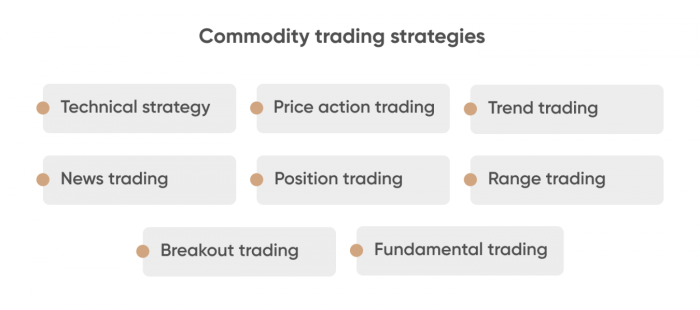
Common Commodities Trading Strategies
Successful commodities trading hinges on a deep understanding and skillful application of various trading strategies. The choice of strategy depends heavily on factors like market conditions, risk tolerance, and the trader’s individual expertise. While no single strategy guarantees profits, a well-defined approach, coupled with rigorous risk management, significantly improves the odds of success.
Spread Trading
Spread trading involves simultaneously buying and selling two related commodities or contracts. The goal is to profit from the price differential between the two, rather than from the absolute price movement of either. This strategy reduces directional risk, as profits can be generated even if both underlying commodities move in the same direction, as long as the spread between them changes as anticipated.
For example, a trader might buy soybean oil futures and simultaneously sell soybean meal futures, anticipating a widening spread based on supply and demand dynamics in the agricultural sector. Successful spread trading requires a thorough understanding of the relationship between the two commodities and the factors influencing their price movements. Unsuccessful spread trades often result from inaccurate assessments of the spread’s likely behavior or from unforeseen market events affecting the correlation between the assets.
Arbitrage
Arbitrage exploits price discrepancies between the same commodity traded on different exchanges or in different forms. If, for instance, gold is trading at a higher price on the COMEX than on the London Bullion Market, an arbitrageur could simultaneously buy gold on the cheaper market and sell it on the more expensive one, pocketing the difference after accounting for transaction costs.
The success of arbitrage relies on the speed and efficiency of execution, as these price differences tend to be short-lived. An unsuccessful arbitrage attempt might occur if the trader fails to execute the trades quickly enough to capitalize on the fleeting price disparity, or if unexpected market shifts erase the price difference before the trades can be completed.
Momentum Trading
Momentum trading capitalizes on the tendency of prices to continue moving in their current direction. Traders identify trending commodities and enter long positions in uptrends and short positions in downtrends. This strategy thrives in strong trending markets, but it can be highly risky during periods of market consolidation or reversals. A successful momentum trade might involve identifying a strong uptrend in crude oil prices and establishing a long position, profiting from the continued price appreciation.
Conversely, an unsuccessful momentum trade could occur if the trader enters a long position near the peak of a trend, only to experience significant losses as the price reverses.
Mean Reversion
Mean reversion strategies exploit the tendency of prices to revert to their historical average or mean. Traders identify commodities that are trading significantly above or below their average and anticipate a return to the mean. This strategy is less sensitive to short-term price fluctuations and can be more effective during periods of market volatility. A successful mean reversion trade might involve shorting a commodity that is significantly overvalued relative to its historical average, profiting as the price falls back toward the mean.
However, a commodity may remain outside of its historical mean for an extended period, leading to significant losses for a mean reversion trader.
Implementing a Momentum Trading Strategy
Before implementing any trading strategy, thorough research and risk assessment are crucial. The following steps Artikel a basic approach to momentum trading:
- Identify trending commodities: Analyze price charts and technical indicators to identify commodities exhibiting strong upward or downward momentum.
- Determine entry and exit points: Use technical analysis tools like moving averages and relative strength index (RSI) to pinpoint optimal entry and exit points.
- Set stop-loss orders: Protect against potential losses by setting stop-loss orders to limit potential losses.
- Manage position size: Avoid overexposure by managing position size appropriately, considering your overall risk tolerance.
- Monitor and adjust: Continuously monitor the market and adjust your positions as needed, based on price movements and changing market conditions.
Commodities Trading and Market Cycles
Commodity markets, unlike many financial markets, exhibit pronounced cyclical patterns influenced by factors like supply and demand, weather conditions, geopolitical events, and technological advancements. Understanding these cycles is crucial for developing effective trading strategies, as market behavior and profitability vary significantly across different phases. Ignoring cyclical patterns can lead to significant losses, while leveraging them can enhance returns.Commodity market cycles are rarely perfectly predictable and can vary in length and intensity.
However, recognizing recurring patterns allows traders to anticipate potential shifts and adapt their approaches. These cycles often involve periods of expansion, peak, contraction, and trough, each presenting unique opportunities and risks.
Identifying Market Cycle Phases
Identifying the current phase of a commodity market cycle involves analyzing various indicators. Fundamental analysis, examining factors such as production levels, consumption trends, and inventory levels, provides insights into long-term cycles. Technical analysis, focusing on price charts and indicators, helps pinpoint shorter-term cycles and potential turning points. For instance, observing price momentum, volume, and support/resistance levels can signal shifts from expansion to contraction.
A sustained decline in price, coupled with decreasing volume, might indicate a transition into a contraction phase. Conversely, increasing prices with rising volume could suggest the beginning of an expansionary phase. Combining fundamental and technical analysis offers a more comprehensive view of the market’s cyclical position.
Capitalizing on Different Market Cycle Phases
Different trading strategies are suitable for each phase of the commodity cycle. During expansionary phases, characterized by rising prices and increasing demand, long positions (buying and holding) are generally favored. Traders might employ trend-following strategies, aiming to capitalize on the upward momentum. Conversely, during contraction phases, characterized by falling prices and reduced demand, short positions (selling and profiting from price declines) become more attractive.
Strategies like mean reversion or short-selling could be employed during this period. However, it’s important to note that during periods of transition, volatility increases, and the risk of significant losses also rises.
Adjusting Trading Strategies Based on Market Cycle Analysis
Successful commodity trading requires adapting strategies to the prevailing market cycle. During periods of rapid expansion, traders might increase position sizes, focusing on trend-following strategies with wider stop-loss orders to manage risk. However, as the market approaches its peak, caution is warranted. Reducing position sizes and tightening stop-loss orders can help limit potential losses as the cycle transitions to contraction.
In a contraction phase, traders may switch to strategies that profit from price declines, such as short-selling or bearish options strategies. As the market nears its trough, opportunities for long positions might emerge, as prices may start to rebound. This requires careful monitoring of market sentiment and fundamental indicators to identify potential turning points. For example, a prolonged period of low prices might eventually lead to reduced production and increased demand, signaling a potential bottom and the start of a new expansion phase.
Therefore, adapting trading strategies to the various phases of the commodity cycle is paramount for long-term success.
Using Leverage and Margin in Commodities Trading
Leverage and margin are fundamental concepts in commodities trading, significantly impacting both potential profits and the risk of substantial losses. Understanding these mechanisms is crucial for navigating the complexities of the commodities market. This section will explore how leverage and margin work, the inherent risks, and illustrate their impact through a practical example.Leverage and margin allow traders to control a larger position in the commodities market than their initial capital would normally allow.
Margin is the initial deposit a trader must make with a broker to open and maintain a leveraged position. Leverage is the ratio of the value of the position to the margin. For instance, a 10:1 leverage means that for every $1 of margin, the trader controls $10 worth of commodities.
Leverage: Risks and Benefits
Using leverage magnifies both profits and losses. A small price movement in the underlying commodity can lead to significant gains or devastating losses, depending on the direction of the market.
- Benefits: Leverage allows traders to participate in potentially lucrative opportunities with a smaller initial investment. It amplifies returns, enabling greater potential profits from successful trades. This can be particularly beneficial in markets with strong trends.
- Risks: The amplified returns also mean amplified losses. A small, adverse price movement can quickly wipe out the initial margin deposit and lead to margin calls, requiring the trader to deposit more funds to maintain their position. Failure to meet a margin call can result in the broker liquidating the position, leading to significant losses.
The risk associated with leverage is directly proportional to the leverage ratio. Higher leverage ratios offer greater potential profits but also expose traders to a higher risk of significant losses. Careful risk management is paramount when using leverage.
Illustrative Scenario: Leverage in Action
Let’s consider a scenario involving trading gold futures contracts. Suppose a trader opens a position with a margin requirement of $10,000 and uses 10:1 leverage. This means the trader controls a $100,000 position.Scenario 1: Successful Trade. If the price of gold increases by 2%, the trader’s $100,000 position would increase by $2,000. Considering the margin requirement, the trader would realize a 20% return on their initial investment ($2,000/$10,000 = 20%).Scenario 2: Unsuccessful Trade.
Conversely, if the price of gold decreases by 2%, the trader’s position would decrease by $2,000. This represents a 20% loss on their initial investment. If the loss reaches a certain threshold, the broker may issue a margin call, demanding additional funds to maintain the position. Failure to meet this margin call would result in the liquidation of the position, potentially leading to the loss of the entire initial margin.This example highlights the double-edged sword of leverage: the potential for significant gains is matched by the potential for equally significant losses.
Effective risk management strategies are essential for mitigating these risks.
Commodities Trading Platforms and Tools
Navigating the world of commodities trading requires access to robust and reliable platforms and tools. The right platform can significantly impact trading efficiency, analysis capabilities, and overall success. Choosing wisely is crucial for both novice and experienced traders. This section examines various platforms and essential tools for effective commodities trading.Choosing a commodities trading platform involves considering several factors, including the range of tradable commodities, available charting tools, order execution speed, and the overall user experience.
Different platforms cater to different trading styles and levels of expertise.
Commodities Trading Platform Features and Functionalities
A successful commodities trading platform offers a comprehensive suite of features designed to streamline the trading process and enhance analytical capabilities. Essential features include real-time market data feeds displaying live price quotes and charts for various commodities, allowing traders to monitor price movements and identify potential trading opportunities. Advanced charting tools enable technical analysis, with features like customizable indicators (RSI, MACD, Bollinger Bands), drawing tools (trend lines, Fibonacci retracements), and various chart types (candlestick, bar, line).
Order placement functionality is paramount, allowing traders to execute trades quickly and efficiently with different order types (market, limit, stop-loss). Account management tools provide a clear overview of trading activity, including account balance, open positions, and transaction history. Many platforms also offer educational resources, news feeds, and analytical tools to support informed decision-making. Finally, robust customer support is crucial for resolving any technical issues or addressing trading-related queries.
Comparative Analysis of Popular Trading Platforms
Several popular platforms cater to commodities traders, each with its strengths and weaknesses. For example, platforms like MetaTrader 4 (MT4) and MetaTrader 5 (MT5) are widely used due to their extensive charting capabilities, automated trading features (Expert Advisors), and large community support. However, they might lack some advanced features found in more specialized platforms. Other platforms, often offered by brokerage firms, may provide access to a wider range of commodities and specialized tools but might have higher fees or less flexible charting options.
The optimal choice depends on individual trading needs and preferences. A detailed comparison across key features—including charting tools, order execution speed, fees, and customer support—would help traders identify the platform best suited to their style. Factors like the availability of specific commodities, the platform’s user interface, and the level of customer support should also be considered.
Essential Tools for Successful Commodities Trading
Beyond the trading platform itself, several supplementary tools are essential for successful commodities trading. High-quality charting software allows for in-depth technical analysis, visualizing price trends and identifying patterns. Reliable news feeds provide real-time updates on economic events, geopolitical developments, and other factors impacting commodity prices. Access to comprehensive market data from reputable providers is crucial for informed decision-making.
This data might include historical price data, fundamental indicators, and analyst reports. Additional tools like economic calendars, which track upcoming economic releases, and risk management software can further enhance trading effectiveness. The combination of a well-chosen platform and these supplementary tools creates a powerful arsenal for successful commodities trading.
COMMODITIES TRADING
Commodities trading represents a vast and complex market involving the buying and selling of raw materials and primary agricultural products. This market is shaped by a multitude of factors, ranging from global economic conditions and geopolitical events to regulatory frameworks and the actions of individual market participants. Understanding these dynamics is crucial for navigating this intricate landscape successfully.Commodities trading operates within a globally interconnected system, influenced by a web of regulatory bodies and international agreements.
Market participants range from individual investors to multinational corporations, each with their own strategies and objectives. Fluctuations in supply and demand, driven by factors such as weather patterns, technological advancements, and political instability, significantly impact prices and overall market trends.
Regulatory Aspects of Commodities Trading
Commodities trading is subject to a complex array of regulations designed to ensure market integrity, transparency, and investor protection. These regulations vary by jurisdiction and often involve multiple agencies, including those responsible for overseeing exchanges, enforcing anti-trust laws, and preventing market manipulation. For example, the Commodity Futures Trading Commission (CFTC) in the United States plays a key role in regulating futures and options markets for commodities, while similar regulatory bodies exist in other countries around the world.
These regulatory bodies establish rules regarding trading practices, position limits, and reporting requirements, aiming to maintain fair and orderly markets.
Key Market Participants in Commodities Trading
The commodities market comprises a diverse range of participants, each with distinct roles and motivations. Producers, such as farmers and mining companies, are primary suppliers, often hedging their price risk through futures contracts. Consumers, including manufacturers and processors, use the market to secure future supplies and manage their input costs. Financial institutions, such as banks and investment firms, provide financing, facilitate trading, and engage in proprietary trading.
Speculators, motivated by price movements rather than underlying supply and demand, contribute to market liquidity and price discovery. Finally, governments may intervene through policies affecting production, consumption, or trade, influencing market dynamics.
Global Economic Influences on Commodities Trading
Commodities play a vital role in the global economy, serving as fundamental inputs for many industries. Economic growth in emerging markets often leads to increased demand for commodities, driving price increases. Conversely, global recessions or economic slowdowns can significantly depress commodity prices. Major geopolitical events, such as wars or political instability in key producing regions, can also disrupt supply chains and cause significant price volatility.
For example, the 2022 war in Ukraine dramatically impacted global wheat and energy markets, causing significant price spikes. Furthermore, shifts in currency exchange rates and inflation rates can influence the price of commodities traded internationally.
Significant Events Impacting Commodities Markets
Several significant events have profoundly impacted commodities markets throughout history. The oil crises of the 1970s demonstrated the vulnerability of the global economy to disruptions in energy supply. The Asian financial crisis of 1997-98 and the global financial crisis of 2008 both led to significant declines in commodity prices. More recently, the COVID-19 pandemic initially caused price volatility across various commodities before a subsequent recovery.
These events highlight the interconnectedness of commodity markets with broader macroeconomic conditions and the potential for unforeseen shocks to create significant market disruptions.
The Role of Commodities in the Global Economy
Commodities are essential building blocks of the global economy, serving as raw materials for countless goods and services. Energy commodities, such as oil and natural gas, power industries and transportation networks. Agricultural commodities, including grains, coffee, and sugar, provide sustenance and raw materials for food processing. Industrial metals, such as iron ore, copper, and aluminum, are critical inputs for manufacturing.
The price and availability of these commodities directly influence the cost of production, inflation rates, and overall economic growth. Their strategic importance makes them crucial elements in global trade and economic stability.
Mastering commodities trading demands a blend of analytical prowess, disciplined risk management, and a keen awareness of market dynamics. While no strategy guarantees success, a thorough understanding of fundamental and technical analysis, coupled with a well-defined risk management plan, significantly increases your chances of profitability. By applying the principles and strategies Artikeld in this guide, you can develop a more informed and effective approach to navigating the complexities of this exciting and challenging market.
FAQ Summary
What are the best commodities to trade for beginners?
Beginners often find success with liquid, easily understood commodities like agricultural products (corn, soybeans) due to their relatively straightforward supply and demand dynamics. However, thorough research and understanding of any chosen commodity are crucial.
How much capital do I need to start commodities trading?
The capital required depends heavily on your chosen trading strategy and leverage. While some platforms allow micro-contracts with low initial investments, a significant capital base is generally recommended to manage risk effectively and withstand potential losses.
What are the common fees associated with commodities trading?
Commodities trading involves brokerage commissions, exchange fees, and potentially financing charges if using leverage. Understanding these costs is vital for calculating profitability and managing expenses.
How can I stay updated on commodity market news?
Reliable sources include financial news websites, dedicated commodity market analysis platforms, and reputable economic publications. Staying informed is crucial for making well-timed trading decisions.


