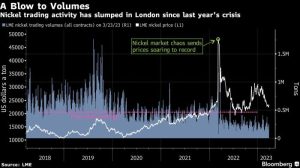
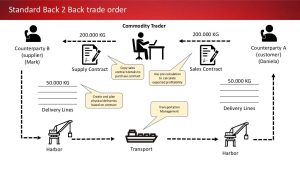
The commodities market, a global arena of fluctuating prices and strategic trading, plays a pivotal role in the world economy. From the energy powering our cities to the agricultural products sustaining our populations, understanding the dynamics of this market is crucial for investors, businesses, and policymakers alike. This analysis delves into the complexities of commodity pricing, exploring the interplay of geopolitical events, weather patterns, economic growth, and speculative trading.
We will examine various analytical techniques, including technical and fundamental analysis, to decipher price trends and predict future movements. Risk management strategies, crucial for navigating the inherent volatility of the commodities market, will also be discussed. Finally, we will explore different trading strategies and the regulatory landscape that governs this dynamic sector.
Introduction to Commodities Markets
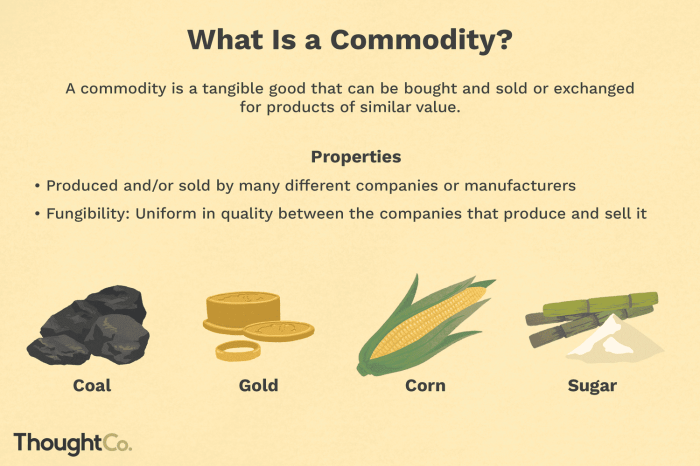
Commodities markets are global marketplaces where raw materials and primary agricultural products are traded. These markets play a crucial role in the global economy, influencing everything from energy prices to the cost of food. Their price fluctuations impact businesses, consumers, and governments worldwide, making understanding their dynamics essential for economic stability and forecasting.Commodities markets facilitate the efficient allocation of resources, connecting producers and consumers across geographical boundaries.
The price discovery mechanism within these markets reflects the balance between supply and demand, influencing investment decisions and shaping production levels across various sectors. The stability and transparency of these markets are therefore vital for global economic health.
Types of Commodities Traded
The commodities traded encompass a wide range of goods categorized broadly into energy, metals, agricultural products, and livestock. Understanding the characteristics of each commodity type is crucial for effective market analysis and informed trading decisions. The following table provides an overview of some key commodities and their respective trading exchanges.
| Commodity Type | Examples | Key Characteristics | Trading Exchanges |
|---|---|---|---|
| Energy | Crude oil, natural gas, gasoline, heating oil | Volatile prices influenced by geopolitical events, weather patterns, and global demand. Often traded as futures contracts. | NYMEX (New York Mercantile Exchange), ICE (Intercontinental Exchange) |
| Metals | Gold, silver, platinum, copper, aluminum, iron ore | Used in various industrial applications and as investment assets. Prices influenced by industrial production, inflation, and investor sentiment. | COMEX (Commodity Exchange), LME (London Metal Exchange) |
| Agricultural Products | Corn, wheat, soybeans, coffee, sugar, cocoa | Prices are highly sensitive to weather conditions, crop yields, and global food demand. Subject to seasonal fluctuations. | CBOT (Chicago Board of Trade), ICE Futures US |
| Livestock | Cattle, hogs, poultry | Prices influenced by feed costs, consumer demand, and disease outbreaks. Often traded as futures contracts. | CME Group (Chicago Mercantile Exchange) |
Supply and Demand in Commodity Pricing
The fundamental principle governing commodity prices is the interaction of supply and demand. When demand for a commodity exceeds its supply, prices tend to rise. Conversely, when supply surpasses demand, prices typically fall. This dynamic is influenced by a multitude of factors, including:
Supply-side factors: Production costs, weather patterns, geopolitical instability, technological advancements, and government policies all impact the supply of commodities. For example, a drought can significantly reduce crop yields, leading to higher agricultural commodity prices.
Demand-side factors: Global economic growth, consumer preferences, industrial production, and speculative trading all influence demand. Strong global economic growth, for instance, typically increases demand for industrial metals, driving up their prices.
The interplay of these supply and demand factors, often exacerbated by speculation and market sentiment, creates the volatility characteristic of many commodity markets. Analyzing these factors is crucial for predicting price movements and managing risk effectively.
Factors Influencing Commodity Prices
Commodity prices, the foundation of global trade and economic activity, are subject to a complex interplay of factors. Understanding these influences is crucial for investors, businesses, and policymakers alike, allowing for more informed decision-making and risk management. This section will delve into some key drivers of commodity price fluctuations.
Geopolitical Events and Commodity Prices
Geopolitical instability significantly impacts commodity markets. Events such as wars, political upheavals, and trade sanctions can disrupt supply chains, leading to price volatility. For example, the 2022 Russian invasion of Ukraine drastically affected global wheat and energy prices. Ukraine and Russia are major exporters of wheat and sunflower oil, and the conflict disrupted their production and export capabilities, leading to significant price increases globally.
Similarly, sanctions imposed on Iran have historically influenced the price of oil, as Iran is a significant oil producer. The ongoing tensions in the Middle East consistently impact oil prices due to their influence on global supply and the perception of risk. These examples highlight how geopolitical events, often unpredictable, can create substantial price swings in commodity markets.
Weather Patterns and Climate Change’s Influence on Agricultural Commodity Prices
Agricultural commodity prices are highly sensitive to weather patterns. Droughts, floods, extreme heat, and unexpected frosts can significantly reduce crop yields, leading to price surges. For instance, severe droughts in key agricultural regions like the American Midwest can cause substantial increases in corn and soybean prices. Climate change, characterized by more frequent and intense extreme weather events, exacerbates this vulnerability.
The increasing frequency of droughts and floods is expected to further destabilize agricultural commodity markets, leading to higher price volatility and potential food security concerns. The impact is not limited to just yield; extreme weather can also damage infrastructure, further hindering transportation and distribution, contributing to price increases.
Economic Growth and Commodity Demand
Economic growth in different regions exerts varying impacts on commodity demand. Rapid economic expansion in emerging markets, such as China and India, fuels strong demand for raw materials like metals, energy, and agricultural products, driving up prices. Conversely, economic slowdowns or recessions in developed economies can lead to reduced demand and lower prices. The differing stages of economic development in various regions create a complex interplay of supply and demand, influencing price dynamics.
For example, China’s rapid industrialization in the past decades significantly boosted demand for commodities like iron ore and copper, contributing to substantial price increases. In contrast, a recession in Europe might reduce demand for oil and other industrial commodities, impacting global prices.
Correlation Between Macroeconomic Indicators and Commodity Prices
The following table illustrates the general correlation between key macroeconomic indicators and commodity prices. Note that these correlations can vary depending on the specific commodity and the prevailing economic conditions.
| Macroeconomic Indicator | Typical Correlation with Commodity Prices | Explanation |
|---|---|---|
| Inflation | Positive | Higher inflation often leads to increased commodity prices as production costs rise. |
| Interest Rates | Negative (generally) | Higher interest rates can reduce investment and borrowing, thus decreasing demand for commodities. |
| Exchange Rates | Variable | Changes in exchange rates can affect the price of internationally traded commodities. A weaker domestic currency can increase import costs and thus commodity prices. |
| Economic Growth (GDP) | Positive | Stronger economic growth usually leads to increased demand for commodities, pushing prices higher. |
Commodity Market Analysis Techniques
Analyzing commodity markets requires a multifaceted approach, combining both technical and fundamental analysis to gain a comprehensive understanding of price trends and potential future movements. Successful trading hinges on the ability to interpret market data effectively and translate this understanding into informed decisions. This section will explore key techniques used in commodity market analysis.
Technical Analysis in Commodity Markets
Technical analysis focuses on historical price and volume data to identify patterns and predict future price movements. It assumes that past market behavior provides clues to future behavior. This approach is independent of fundamental factors like supply and demand, focusing solely on chart patterns and indicators.
Moving Averages and Other Technical Indicators
Moving averages, such as simple moving averages (SMA) and exponential moving averages (EMA), smooth out price fluctuations, making it easier to identify trends. The SMA calculates the average price over a defined period, while the EMA gives more weight to recent prices. Other indicators, like Relative Strength Index (RSI) and Bollinger Bands, provide insights into momentum and volatility.
For example, a bullish crossover, where a short-term moving average crosses above a long-term moving average, often signals a potential upward trend. Conversely, a bearish crossover suggests a potential downward trend. RSI values above 70 generally suggest overbought conditions, while values below 30 indicate oversold conditions. Bollinger Bands show price volatility; prices touching the upper band may indicate overbought conditions, while prices touching the lower band may suggest oversold conditions.
Fundamental Analysis of Commodity Markets
Fundamental analysis examines the underlying factors influencing commodity prices, focusing on supply and demand dynamics, geopolitical events, and economic conditions. Unlike technical analysis, which relies solely on historical price data, fundamental analysis seeks to understand the intrinsic value of a commodity.
Fundamental Analysis of Crude Oil: A Step-by-Step Guide
Let’s illustrate fundamental analysis with crude oil as an example. This involves a multi-step process:
- Assess Global Supply: Analyze OPEC production quotas, non-OPEC supply (e.g., US shale oil production), and disruptions due to geopolitical instability or natural disasters. A decrease in global supply, all else being equal, typically leads to higher prices.
- Evaluate Global Demand: Consider global economic growth, particularly in major oil-consuming nations like China and the US. Strong economic growth usually translates to higher oil demand, pushing prices upward. Changes in transportation patterns (e.g., increased adoption of electric vehicles) can also impact demand.
- Analyze Inventory Levels: Monitor crude oil inventory levels in key storage hubs. High inventory levels suggest ample supply, potentially putting downward pressure on prices. Conversely, low inventory levels indicate tight supply, supporting higher prices.
- Consider Geopolitical Factors: Geopolitical events, such as sanctions, wars, or political instability in major oil-producing regions, can significantly impact supply and consequently, prices. The 2022 Russian invasion of Ukraine dramatically illustrated this, causing significant price volatility.
- Assess the US Dollar: Crude oil is priced in US dollars. A stronger dollar generally makes oil more expensive for buyers using other currencies, potentially reducing demand and putting downward pressure on prices.
- Examine Government Policies: Government policies, such as taxes, subsidies, and environmental regulations, can influence both supply and demand. For instance, carbon taxes can increase production costs, leading to higher prices.
By systematically evaluating these factors, analysts can form a view on the future direction of crude oil prices. For example, if global economic growth is robust, OPEC production is constrained, and geopolitical risks are elevated, a fundamental analyst might predict higher crude oil prices. Conversely, if global demand weakens due to a recession and supply increases significantly, a price decline might be anticipated.
It is important to remember that these factors interact in complex ways, and accurate forecasting requires careful consideration of their interplay.
Risk Management in Commodities Trading
Commodities trading, while offering significant profit potential, is inherently risky. Understanding and mitigating these risks is crucial for successful participation in this market. Effective risk management involves identifying potential threats, implementing appropriate strategies, and continuously monitoring market conditions. This section will explore the various risks involved and Artikel practical risk management techniques.
Types of Risks in Commodities Trading
Commodities markets are susceptible to a wide range of risks. Price volatility, driven by supply and demand imbalances, macroeconomic factors, and speculative trading, represents a primary concern. Geopolitical events, such as wars, political instability, or trade disputes, can significantly impact commodity prices, creating both opportunities and threats. Regulatory changes, whether at the national or international level, can also alter market dynamics and affect trading strategies.
Furthermore, counterparty risk, the risk that the other party in a transaction will default, is a significant consideration, particularly in over-the-counter (OTC) markets. Finally, operational risks, encompassing errors in trading execution, data management issues, and system failures, can lead to substantial losses.
Risk Management Strategies
Several strategies can help mitigate the inherent risks in commodities trading. Hedging, a fundamental risk management technique, involves taking an offsetting position in a related market to reduce exposure to price fluctuations. For example, a farmer expecting to sell corn in the future could hedge their price risk by selling corn futures contracts. Diversification, another crucial strategy, involves spreading investments across different commodities, geographies, and trading strategies to reduce the impact of any single adverse event.
Stop-loss orders, which automatically sell a position when it reaches a predetermined price, limit potential losses. These orders act as a safety net, preventing significant losses in case of adverse price movements. Furthermore, thorough due diligence, including fundamental and technical analysis, helps in informed decision-making and reduces the risk of poor investment choices. Regular portfolio monitoring and adjustment are also crucial to adapting to changing market conditions and ensuring that risk remains within acceptable limits.
Profit and Loss Calculation
Calculating potential profit and loss is vital for effective risk management. Consider a simple example: an investor buys 100 ounces of gold at $1,800 per ounce and sells it at $1,900 per ounce. The profit is ($1,900 – $1,800)
- 100 = $10,000. Conversely, if the investor sells at $1,700 per ounce, the loss is ($1,700 – $1,800)
- 100 = -$10,000. More complex calculations involve considering transaction costs, commissions, and the time value of money. It’s crucial to incorporate these factors into any profit/loss projection to gain a realistic view of potential outcomes. For futures contracts, the calculation involves the contract size and price changes multiplied by the contract multiplier. For options, the profit/loss calculation depends on the option’s strike price, premium paid, and the underlying asset’s price at expiration.
Risk Mitigation Techniques
A well-defined risk management plan should incorporate various techniques.
- Hedging: Using futures or options contracts to offset price risk. Example: An airline hedging against rising jet fuel prices by purchasing fuel futures contracts.
- Diversification: Spreading investments across multiple commodities to reduce exposure to any single market’s volatility. Example: Investing in gold, silver, and agricultural commodities rather than concentrating solely on one.
- Stop-Loss Orders: Automatically selling a position when it reaches a specified price to limit losses. Example: Setting a stop-loss order to sell a position in crude oil if the price falls below a certain level.
- Position Sizing: Determining the appropriate amount of capital to allocate to each trade to control overall risk. Example: Allocating only a small percentage of the trading capital to any single trade.
- Stress Testing: Simulating extreme market conditions to assess the portfolio’s resilience. Example: Analyzing the portfolio’s performance under scenarios of significant price drops in multiple commodities.
Commodities Trading Strategies
Successful commodities trading hinges on a well-defined strategy tailored to individual risk tolerance and market outlook. Choosing the right approach requires careful consideration of various factors, including the time horizon, capital available, and the specific commodity being traded. Different strategies offer unique advantages and disadvantages, making it crucial to understand their nuances before implementation.
Long-Term Investing in Commodities
Long-term commodity investing focuses on holding positions for extended periods, typically months or even years, capitalizing on fundamental shifts in supply and demand. This approach often targets commodities with strong long-term growth potential, driven by factors like increasing global demand or limited supply. The strategy benefits from a reduced need for constant market monitoring and a lower susceptibility to short-term price fluctuations.
However, it requires significant patience and can be less profitable during periods of market stagnation or decline. A potential example would be investing in agricultural commodities like soybeans, anticipating a long-term increase in global population and corresponding demand for food.
Short-Term Commodity Trading
Short-term trading involves frequent buying and selling of commodities, aiming to profit from short-term price movements. This approach necessitates active market monitoring and a deep understanding of technical analysis. While potentially highly profitable, it also carries significantly higher risk due to the increased frequency of trades and exposure to volatility. Day trading and swing trading fall under this category.
For example, a trader might buy natural gas futures contracts anticipating a short-term price surge based on a weather forecast predicting a cold snap. The high risk associated with this strategy demands strict risk management techniques.
Arbitrage in Commodities Markets
Arbitrage involves exploiting price discrepancies between related commodities or the same commodity across different markets. For instance, a trader might buy gold in one market at a lower price and simultaneously sell it in another market at a higher price, capturing the price difference as profit. This strategy requires quick execution and access to multiple markets. While potentially low-risk, arbitrage opportunities are often fleeting and require sophisticated market knowledge and technological capabilities.
Successful arbitrage relies on identifying and capitalizing on these temporary imbalances before they disappear due to market forces.
Market Timing and Position Sizing in Commodities Trading
Effective market timing, the art of entering and exiting trades at optimal moments, is crucial for success in any commodities trading strategy. This involves analyzing market trends, technical indicators, and fundamental factors to identify favorable entry and exit points. Position sizing, determining the appropriate amount of capital to allocate to each trade, is equally important. Over-leveraging can lead to significant losses, while under-leveraging can limit potential profits.
A successful trader carefully balances risk and reward by adjusting position size based on market conditions and their own risk tolerance. For example, during periods of high volatility, a trader might reduce their position size to mitigate potential losses.
Hypothetical Trading Plan: Crude Oil
Let’s consider a hypothetical trading plan for crude oil. The strategy will be short-term, focusing on price movements driven by geopolitical events.
| Action | Details |
|---|---|
| Entry Point | Buy crude oil futures contracts at $75 per barrel, anticipating a price increase due to a potential geopolitical disruption. |
| Stop-Loss | $72 per barrel. If the price falls below this level, the position will be closed to limit potential losses. |
| Profit Target | $80 per barrel. Once this price is reached, the position will be closed to secure profits. |
| Position Sizing | Allocate 2% of the trading capital to this trade, limiting potential losses to a manageable level. |
This plan is purely hypothetical and should not be considered investment advice. Real-world trading involves numerous unpredictable factors. Always conduct thorough research and consider professional advice before engaging in commodities trading.
Understanding Commodity Futures Contracts
Commodity futures contracts are legally binding agreements to buy or sell a specific commodity at a predetermined price on a future date. They are a cornerstone of the commodities market, serving vital roles in both price discovery and risk management for producers, consumers, and speculators. Understanding their mechanics is crucial for navigating this complex market.Futures contracts facilitate price discovery by aggregating supply and demand expectations from a wide range of market participants.
The resulting price reflects the collective wisdom of the market about the future value of the commodity, providing a benchmark for current spot prices and influencing future production and consumption decisions. Furthermore, these contracts offer a powerful tool for managing risk associated with price volatility. Businesses can hedge against potential price fluctuations by locking in future prices, protecting their profit margins from adverse market movements.
Futures Contract Mechanics
A futures contract specifies the commodity’s type and grade, quantity, delivery location, and delivery timeframe. For example, a contract might specify 5,000 bushels of corn of a particular grade, delivered to a specific Chicago warehouse during a particular month. The contract also Artikels trading terms, including the price increments (tick size) and daily price limits. Trading occurs on organized exchanges, ensuring transparency and liquidity.
Buying and Selling Futures Contracts
The process of buying and selling futures contracts involves opening an account with a brokerage firm specializing in futures trading. Traders must then meet margin requirements, which represent a deposit securing the contract. This margin is a percentage of the contract’s value and acts as collateral against potential losses. Margin calls occur if the trader’s account equity falls below a specified level, requiring additional funds to be deposited.
Profits or losses are realized upon closing the position (selling a previously bought contract or buying a previously sold contract) before the contract’s delivery date. Settlement typically occurs through cash settlement rather than physical delivery of the commodity. The final settlement price is determined by the market price at the contract’s expiration.
Types of Commodity Futures Contracts
A vast array of commodities are traded via futures contracts, encompassing agricultural products (corn, wheat, soybeans, coffee, sugar), energy products (crude oil, natural gas, heating oil), metals (gold, silver, copper, platinum), and livestock (cattle, hogs, lean hogs). Each commodity has its own set of contract specifications, reflecting its unique characteristics and trading dynamics. For example, crude oil contracts might specify the type of crude oil, delivery location (e.g., Cushing, Oklahoma), and delivery month.
The specific details of each contract are publicly available and vary based on the commodity and the exchange.
Margin Requirements and Settlement Procedures
Margin requirements are crucial for mitigating risk in futures trading. These requirements are set by the exchange and vary depending on the volatility of the underlying commodity and the trader’s account size. For instance, a highly volatile commodity like crude oil may have a higher margin requirement than a less volatile commodity like wheat. Settlement procedures involve closing out the contract before the delivery date.
Most futures contracts are settled in cash, with the difference between the initial contract price and the settlement price transferred between buyer and seller. Physical delivery of the commodity is less common, primarily occurring when traders intend to take actual possession of the commodity. The intricacies of margin calls and settlement procedures are typically explained in detail by the brokerage firm.
The Role of Speculation in Commodities Markets
Speculation, often viewed with a mixture of apprehension and fascination, plays a vital role in the functioning of commodities markets. While sometimes blamed for price volatility, speculators are essential for providing liquidity and facilitating price discovery, mechanisms crucial for the efficient allocation of resources. Their actions, however, can significantly impact market dynamics, making understanding their role critical for anyone involved in commodities trading.Speculators contribute significantly to market liquidity by providing a readily available pool of buyers and sellers.
This depth of market activity ensures that trades can be executed quickly and efficiently, even during periods of high volume or uncertainty. Without speculators, the market would be significantly thinner, leading to wider bid-ask spreads and making it more difficult for producers and consumers to hedge their price risks effectively. This increased liquidity also allows for more accurate price discovery, as the constant interaction of buyers and sellers reflects the collective wisdom of the market regarding the value of a particular commodity.
Speculative Trading and Price Volatility
The inherent nature of speculative trading – taking positions based on anticipated price movements – can amplify price volatility. When speculators anticipate price increases, they may aggressively buy contracts, driving prices upward. This upward momentum can attract further speculative buying, creating a self-reinforcing cycle that leads to sharp price increases. Conversely, if speculators anticipate price declines, their selling pressure can trigger a downward spiral, resulting in significant price drops.
The degree to which speculation influences price volatility depends on several factors, including the level of market participation by speculators, the degree of leverage employed, and the overall market sentiment. For example, a sudden influx of speculative capital into a relatively illiquid market can exacerbate price swings significantly more than in a liquid market with a broad range of participants.
Types of Speculators and Their Trading Strategies
Speculators can be broadly categorized based on their investment horizons and trading styles. Long-term speculators, often referred to as “position traders,” maintain their positions for extended periods, typically months or even years, betting on long-term price trends. They tend to employ fundamental analysis, focusing on macroeconomic factors and long-term supply and demand dynamics. In contrast, short-term speculators, or “day traders,” hold their positions for shorter periods, often just hours or days, attempting to profit from short-term price fluctuations.
They may use technical analysis, focusing on chart patterns and other market indicators to identify short-term trading opportunities. A third category, swing traders, fall between these two extremes, holding positions for several days or weeks. Their strategies often incorporate elements of both fundamental and technical analysis.
Historical Examples of Speculative Impact on Commodity Prices
The impact of speculation on commodity prices is frequently debated, but history offers numerous examples of its influence. The silver market in the late 1970s and early 1980s experienced dramatic price swings partly fueled by speculative activity. Similarly, the oil market has witnessed periods of significant price volatility influenced by speculative trading, particularly during periods of geopolitical uncertainty or supply disruptions.
The 2008 food price crisis, while complex and multifaceted, also saw a role played by speculative investment in agricultural commodities. These examples highlight the potential for speculative trading to both amplify existing price trends and even create new ones, illustrating the complex interplay between speculation and commodity prices. While it’s impossible to isolate speculation as the sole driver in these instances, its contribution to the volatility observed is undeniable.
Commodities Trading Regulations and Compliance
Navigating the commodities market requires a thorough understanding of the regulatory landscape. Robust regulatory frameworks are crucial for maintaining market integrity, protecting investors, and fostering fair competition. These regulations vary across jurisdictions but generally aim to prevent manipulation, fraud, and other forms of market abuse.The complexities of commodities trading necessitate a comprehensive regulatory approach. Regulatory bodies play a vital role in overseeing trading activities, enforcing rules, and investigating potential violations.
Compliance with these regulations is not merely a legal obligation; it is essential for building trust and confidence in the market. Failure to comply can lead to significant penalties and reputational damage.
Key Regulations Governing Commodities Trading
Several key regulations govern commodities trading globally. In the United States, the Commodity Futures Trading Commission (CFTC) is the primary regulator, overseeing futures and options markets. Its regulations cover areas such as position limits, market manipulation, and customer protection. The European Union, on the other hand, has the European Securities and Markets Authority (ESMA), which plays a similar role, working within the framework of the Markets in Financial Instruments Directive (MiFID II).
Other jurisdictions have their own regulatory bodies with specific rules tailored to their domestic markets. These regulations often include requirements for registration, reporting, and record-keeping for participants in the commodities markets.
The Role of Regulatory Bodies in Ensuring Market Integrity and Protecting Investors
Regulatory bodies act as gatekeepers, ensuring the integrity of commodities markets. Their responsibilities include setting and enforcing trading rules, monitoring market activity for suspicious behavior, investigating potential violations, and imposing sanctions on those found guilty of misconduct. They also aim to protect investors by establishing standards for transparency and disclosure, promoting fair trading practices, and providing mechanisms for resolving disputes.
For example, the CFTC’s role in preventing market manipulation is crucial in maintaining investor confidence. Similarly, ESMA’s oversight of trading activities within the EU helps maintain a level playing field for all participants.
Importance of Compliance with Regulations in Commodities Trading
Compliance with regulations is paramount for several reasons. Firstly, it mitigates legal and financial risks. Non-compliance can result in hefty fines, legal action, and reputational damage. Secondly, it fosters market stability and trust. When participants adhere to rules, it promotes a fair and transparent market, attracting more investment and participation.
Thirdly, it safeguards investors. Robust regulations protect investors from fraud, manipulation, and other forms of market abuse, ensuring a safer trading environment. Finally, compliance demonstrates a commitment to ethical and responsible trading practices.
Examples of Regulatory Violations and Their Consequences
Numerous instances of regulatory violations in commodities trading have highlighted the importance of compliance. For example, several firms have faced substantial fines for manipulating commodity prices or failing to meet reporting requirements. In some cases, individuals have been criminally prosecuted for engaging in fraudulent activities. The consequences can include significant financial penalties, trading bans, and even imprisonment.
These examples underscore the severe repercussions of non-compliance and the crucial role of regulatory oversight in maintaining a fair and efficient commodities market. The specific penalties depend on the severity and nature of the violation, the jurisdiction involved, and the regulatory body’s enforcement actions.
Mastering commodities market analysis requires a multifaceted approach, combining an understanding of macroeconomic factors, technical indicators, and sound risk management principles. By carefully considering the interplay of supply and demand, geopolitical risks, and market sentiment, informed decisions can be made. This guide provides a framework for navigating the complexities of this crucial market, empowering readers to make more strategic and profitable choices within the dynamic world of commodities trading.
Detailed FAQs
What are the major commodity trading exchanges?
Major exchanges include the CME Group (Chicago Mercantile Exchange), ICE Futures (Intercontinental Exchange), and the London Metal Exchange (LME).
How do I get started in commodities trading?
Begin with thorough research and education. Consider opening a brokerage account with a reputable firm specializing in commodities trading. Start with a small amount of capital and focus on learning the market before making significant investments.
What is the difference between hedging and speculation in commodities trading?
Hedging aims to reduce risk by offsetting potential losses in one area with gains in another. Speculation involves taking on risk in anticipation of price movements for profit.
What are some common mistakes beginners make in commodities trading?
Common mistakes include inadequate research, poor risk management, emotional decision-making, and over-leveraging.