
Navigating the dynamic world of commodity trading requires astute decision-making, and commodity trading signals offer a valuable tool for informed trading strategies. These signals, derived from various analytical methods, provide insights into potential market movements, helping traders to identify opportune entry and exit points. Understanding the nuances of different signal types, their sources, and effective interpretation is crucial for successful implementation.
This guide delves into the multifaceted nature of commodity trading signals, exploring their generation, interpretation, and practical application within a comprehensive risk management framework. We examine both technical and fundamental analysis approaches, highlighting the strengths and weaknesses of various signal providers and offering strategies for filtering and prioritizing signals to optimize trading outcomes. Case studies and illustrative examples will further illuminate the practical application of these signals in real-world trading scenarios.
Interpreting Commodity Trading Signals
Successfully navigating the commodity markets relies heavily on the ability to accurately interpret trading signals. These signals, derived from various technical and fundamental analyses, provide insights into potential price movements. However, not all signals are created equal, and understanding how to evaluate their reliability is crucial for effective trading.Factors Affecting Signal Reliability
Signal Source and Methodology
The reliability of a commodity trading signal is intrinsically linked to its source and the methodology employed in its generation. Reputable sources, employing robust and transparent methodologies, tend to produce more reliable signals. Consider the track record of the signal provider, their expertise in commodity markets, and the level of detail provided in their analysis. Signals based on sound fundamental analysis, such as supply and demand dynamics or macroeconomic indicators, often prove more reliable in the long term compared to those solely based on short-term price fluctuations.
For example, a signal indicating a potential price surge in coffee due to a significant crop failure in a major producing region would likely be more reliable than a signal based solely on a technical indicator like a moving average crossover.
Signal Consistency and Accuracy
Consistent and accurate signals are a hallmark of reliability. A signal provider consistently generating accurate predictions across various market conditions builds credibility. Examine historical performance data, if available, to assess the signal’s past accuracy. Backtesting strategies, which involve applying a trading strategy to historical data, can provide valuable insights into potential profitability and risk. A signal that accurately predicts price movements in various market conditions (bullish, bearish, sideways) indicates a higher degree of reliability.
Strategies for Filtering and Prioritizing Commodity Trading Signals
Effective commodity trading necessitates a selective approach to signals. Not all signals are equally valuable, and indiscriminate following can lead to significant losses.
Signal Filtering Techniques
Filtering signals involves systematically eliminating less reliable ones. This can be achieved through various techniques. For instance, only considering signals from reputable sources with a proven track record can significantly improve the quality of signals used. Another method is to set specific criteria, such as minimum profit targets or maximum risk thresholds, that a signal must meet before it’s considered.
This helps to eliminate signals that are unlikely to be profitable or excessively risky.
Signal Prioritization Methods
Prioritizing signals involves ranking them based on their perceived reliability and potential profitability. This could involve assigning weights to different signals based on their source, historical accuracy, and alignment with overall market trends. For instance, a signal from a well-established analyst aligned with a strong underlying fundamental trend would likely receive a higher priority than a signal generated by a less-known source based solely on short-term price patterns.
Risk Management When Using Commodity Trading Signals
Even the most reliable signals carry inherent risks. Effective risk management is paramount to protect capital and ensure long-term trading success.
Risk Management Strategies
Implementing a robust risk management plan is crucial when utilizing commodity trading signals. This plan should incorporate various strategies to mitigate potential losses. These include position sizing, which limits the amount of capital allocated to any single trade, and stop-loss orders, which automatically exit a trade if the price moves against the predicted direction, limiting potential losses. Diversification across different commodities also helps reduce overall portfolio risk.
For instance, instead of concentrating investments solely on one commodity, like gold, diversifying into other commodities such as silver, oil, or agricultural products reduces the impact of a potential downturn in a single commodity.
Hypothetical Trading Plan
A well-structured trading plan incorporating commodity trading signals requires careful consideration of various factors.
Example Trading Plan
Let’s consider a hypothetical trading plan incorporating multiple signals. Suppose we receive a buy signal for soybean futures from a reputable analyst, citing favorable weather conditions and strong export demand. Simultaneously, a technical analysis signal based on a bullish head and shoulders pattern on the daily chart also suggests a potential price increase. Our risk management plan dictates a position size limiting the potential loss to 2% of our trading capital, and we set a stop-loss order below the recent support level.
If the price moves favorably, we might consider taking partial profits at a pre-determined target, while letting a portion of the position run to capture further potential gains. Conversely, if the price moves against our prediction, the stop-loss order would automatically exit the trade, limiting our losses. This hypothetical scenario demonstrates how multiple signals can be integrated into a well-defined trading plan with a robust risk management strategy.
Utilizing Commodity Trading Signals in Practice
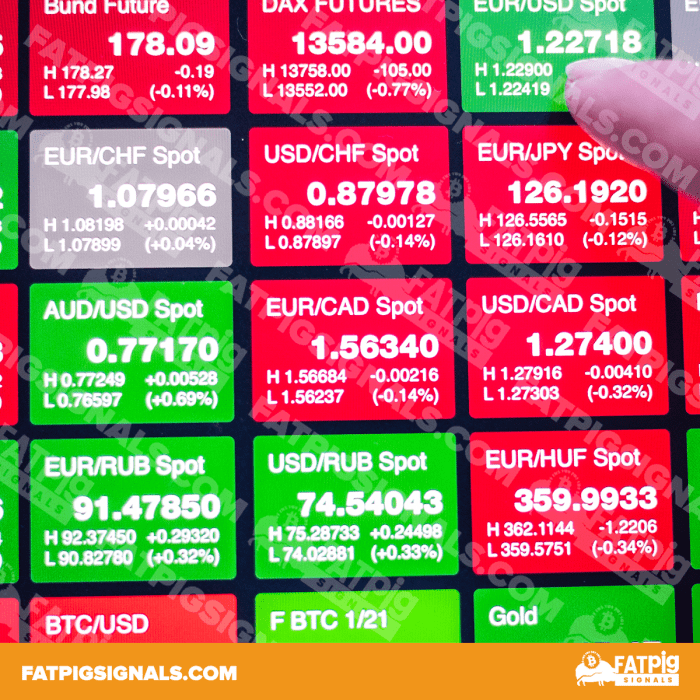
Successfully integrating commodity trading signals into your trading strategy requires a methodical approach. It’s not simply about blindly following each signal; rather, it involves understanding the context of the signal, aligning it with your overall trading plan, and managing risk effectively. This section details how to practically utilize these signals to make informed trading decisions.Integrating Commodity Trading Signals into a Trading Strategy involves several key steps.
A robust strategy considers risk management, signal validation, and the specific characteristics of the commodity being traded. Ignoring these aspects can lead to significant losses.
Integrating Signals into a Trading Strategy
A well-defined trading strategy should incorporate risk management techniques, such as stop-loss orders and position sizing, alongside the use of commodity trading signals. These signals should be viewed as one input into your decision-making process, not the sole determinant. For example, a strong buy signal might be ignored if the overall market trend is bearish, or if other technical indicators suggest caution.
Successful traders often combine signals from multiple sources and cross-reference them with fundamental analysis to increase the accuracy of their predictions. This layered approach minimizes the impact of false signals and enhances the overall effectiveness of the strategy.
Executing Trades Based on Commodity Trading Signals
Executing trades based on commodity trading signals requires a structured approach. First, identify a reliable signal provider or develop your own system for generating signals. Next, establish clear entry and exit criteria, including stop-loss and take-profit levels. Before entering a trade, review the current market conditions and assess the potential risks and rewards. This pre-trade analysis helps to ensure the trade aligns with your overall strategy and risk tolerance.
Finally, execute the trade through your chosen brokerage platform, meticulously recording the trade details for future analysis. For example, a long position in gold based on a breakout signal would involve placing a buy order above the resistance level, with a stop-loss order placed below the support level.
Comparison of Trading Platforms Supporting Commodity Trading Signals
Different trading platforms offer varying levels of support for commodity trading signals. Some platforms directly integrate signal providers, allowing users to receive signals directly within the platform’s interface. Others offer customizable charting tools and technical indicators that allow traders to generate their own signals. The choice of platform depends on individual needs and preferences. For example, a platform like TradingView offers extensive charting capabilities and community-generated signals, while a platform like MetaTrader 4 or 5 provides a more traditional brokerage experience with options for integrating third-party signal providers.
Consider factors such as ease of use, cost, available tools, and the level of support for commodity trading signals when selecting a platform.
Case Study: Soybean Futures
Consider a trader utilizing a combination of moving average crossover signals and RSI (Relative Strength Index) to trade soybean futures. A bullish crossover of the 50-day and 200-day moving averages, coupled with an RSI above 50, indicated a potential long opportunity. The trader entered a long position at $14.00 per bushel, setting a stop-loss at $13.50 and a take-profit at $15.00.
Following a period of upward price movement, the take-profit was triggered, resulting in a successful trade. However, had the market trended downward quickly, the stop-loss would have limited potential losses. This illustrates how the strategic use of signals, combined with risk management, can contribute to successful trading. Conversely, a failure to utilize a stop-loss could have resulted in substantial losses, highlighting the importance of risk management even with seemingly strong signals.
Commodities Trading
The commodities market is a dynamic and complex ecosystem where raw materials and primary agricultural products are traded globally. Understanding its key characteristics is crucial for successful participation. This market is influenced by a wide range of factors, from geopolitical events to weather patterns and technological advancements, making it both lucrative and inherently risky.
Key Characteristics of the Commodities Market
The commodities market is characterized by its global reach, price volatility, and significant influence on the global economy. Commodity prices are susceptible to supply and demand fluctuations, often amplified by speculation and hedging activities. Furthermore, the market is subject to regulatory oversight, varying across different jurisdictions and commodities. The physical nature of commodities also introduces unique logistical challenges, such as storage, transportation, and quality control.
Finally, commodity markets often exhibit cyclical patterns, influenced by seasonal factors and long-term economic trends.
Major Commodity Categories
Commodities are broadly categorized into several key sectors, each with its own unique characteristics and market dynamics. These categories include energy, metals, and agriculture.
- Energy: This sector encompasses crude oil, natural gas, gasoline, and heating oil. Price fluctuations are heavily influenced by global supply and demand, geopolitical stability, and technological advancements in energy production.
- Metals: This category includes precious metals like gold and silver, and industrial metals such as copper, aluminum, and iron ore. Demand is driven by industrial production, technological advancements, and investment sentiment. Geopolitical factors and mining production levels significantly impact prices.
- Agriculture: This sector encompasses a vast array of crops and livestock, including grains (wheat, corn, soybeans), soft commodities (coffee, sugar, cocoa), and livestock (cattle, hogs, poultry). Weather patterns, global demand, and government policies are major factors influencing prices.
Significant Events Impacting the Commodities Market
Numerous events have profoundly impacted the commodities market throughout history. These events highlight the market’s sensitivity to external shocks and the interconnectedness of global economies.
- OPEC Oil Embargo (1973): This event dramatically increased oil prices, triggering a global recession and reshaping the global energy landscape.
- The 2008 Financial Crisis: The crisis led to a significant decline in commodity prices, reflecting the interconnectedness of financial and commodity markets.
- The COVID-19 Pandemic (2020): The pandemic initially caused a sharp decline in demand, followed by price volatility as economies reopened and supply chains faced disruptions.
- The War in Ukraine (2022): This conflict significantly impacted energy and agricultural commodity prices, due to disruptions in supply chains and export routes.
The Role of Speculation and Hedging
Speculation and hedging are integral aspects of the commodities market, playing distinct but interconnected roles.
Speculation involves taking a position in the market with the expectation of profiting from price movements. Speculators contribute to market liquidity and can exacerbate price volatility. For example, a speculator might buy oil futures contracts anticipating a price increase, hoping to sell them at a higher price later.
Hedging, conversely, is a risk management strategy used to mitigate price fluctuations. Producers or consumers of commodities use hedging to protect themselves against adverse price movements. For example, a farmer might sell wheat futures contracts to lock in a price for their future harvest, protecting against potential price drops.
Risk Management in Commodity Trading
Commodity trading, while offering significant profit potential, is inherently risky. Understanding and mitigating these risks is crucial for long-term success. Effective risk management isn’t about avoiding risk entirely—it’s about intelligently managing exposure to various potential losses. This involves identifying potential threats, quantifying their impact, and implementing strategies to minimize negative consequences.
Types of Risks in Commodity Trading
Commodity trading exposes participants to a range of interconnected risks. These risks are not mutually exclusive and often interact to create complex scenarios. A thorough understanding of each risk type is essential for developing a robust risk management plan.
- Market Risk: This encompasses the risk of losses due to unfavorable price movements. For example, a long position in corn could suffer significant losses if the price of corn falls unexpectedly due to a bumper harvest. This risk is amplified by leverage, where traders utilize borrowed funds to magnify potential gains (and losses).
- Liquidity Risk: This is the risk of not being able to readily buy or sell a commodity at a fair price. Illiquid markets, often characterized by low trading volume, can lead to significant price slippage or the inability to exit a position when desired. This is particularly relevant for less-traded commodities or during periods of market stress.
- Credit Risk: This refers to the risk of counterparty default. In futures contracts, for instance, there’s a risk that the other party will fail to fulfill their obligations. This is especially relevant when trading with less-established brokers or during periods of financial instability.
- Operational Risk: This encompasses risks related to internal processes, systems, and people. Examples include errors in order execution, system failures, or fraud. Robust internal controls and well-trained personnel are crucial to mitigate operational risks.
Risk Management Techniques
Several techniques can be employed to manage the risks inherent in commodity trading. These techniques are often used in combination to create a layered approach to risk mitigation.
- Diversification: Spreading investments across different commodities, geographies, and trading strategies reduces exposure to any single risk factor. A portfolio holding both agricultural and energy commodities is less vulnerable to a downturn in a single sector.
- Stop-Loss Orders: These are orders to automatically sell a commodity when its price falls to a predetermined level, limiting potential losses. For example, if a trader buys gold at $1900/oz, they might set a stop-loss order at $1850/oz to automatically sell if the price drops to that level. This protects against significant losses due to unexpected market downturns.
- Hedging: This involves using offsetting positions to reduce risk. For example, a farmer expecting to sell corn in the future might buy corn futures contracts to lock in a price and protect against price declines before harvest.
- Position Sizing: Carefully determining the appropriate amount of capital to allocate to each trade is crucial. Over-leveraging can magnify losses significantly, while under-leveraging can limit potential profits. A well-defined position sizing strategy should consider both risk tolerance and market volatility.
- Stress Testing: This involves simulating various adverse market scenarios to assess the potential impact on a portfolio. This helps traders identify vulnerabilities and adjust their strategies accordingly. For example, testing the portfolio’s resilience to a sharp and sudden 10% drop in all commodity prices helps identify weaknesses.
Risk Management Checklist for Traders Using Signals
Before executing any trade based on a signal, a trader should consider the following:
- Signal Source Reliability: Evaluate the track record and methodology of the signal provider. Are the signals consistently accurate and profitable? What is their risk management approach?
- Trade Setup Analysis: Independently verify the signal’s rationale and assess the underlying market conditions. Does the trade align with your own analysis and risk tolerance?
- Stop-Loss Placement: Determine a realistic stop-loss level based on technical analysis or market volatility. This should be set before entering the trade to limit potential losses.
- Position Sizing: Allocate capital to the trade based on your risk tolerance and the potential reward-to-risk ratio. Avoid over-leveraging.
- Diversification Across Signals: Don’t rely solely on a single signal provider or trading strategy. Diversify across multiple sources and approaches.
- Regular Portfolio Review: Regularly monitor your open positions and adjust your risk management strategy as needed. Market conditions are constantly evolving.
Illustrative Examples of Commodity Trading Signals
Understanding how commodity trading signals translate into actionable trading strategies is crucial for success. This section provides concrete examples of both bullish and bearish signals, illustrating how different indicators can be interpreted and acted upon. We’ll also examine visual representations of these signals using chart examples.
Bullish Commodity Trading Signal and Subsequent Trading Action
Imagine a scenario involving corn futures. A trader observes a consistent upward trend in the price of corn over several weeks, supported by positive news regarding reduced crop yields due to adverse weather conditions. Technical indicators, such as a moving average crossover (where the shorter-term moving average crosses above the longer-term moving average), and a bullish candlestick pattern (like a hammer or bullish engulfing pattern) are also present.
This confluence of factors generates a strong bullish signal. The trader, based on their risk tolerance and trading plan, might decide to initiate a long position (buying corn futures contracts), anticipating further price appreciation. They might set a stop-loss order below the recent support level to limit potential losses, and a take-profit order at a predetermined price target based on their analysis.
Bearish Commodity Trading Signal and Subsequent Trading Action
Let’s consider the example of crude oil. News emerges indicating a significant increase in global oil production, surpassing anticipated demand. Simultaneously, the price of crude oil experiences a sharp decline, breaking below key support levels. Technical indicators, such as a head and shoulders pattern (a bearish reversal pattern) on the daily chart, and a bearish crossover of moving averages, further confirm the bearish sentiment.
This combination of fundamental and technical signals generates a strong bearish signal. A trader might respond by initiating a short position (selling crude oil futures contracts), betting on further price declines. They would establish a stop-loss order above the recent resistance level and a take-profit order at a predetermined price target, again based on their risk management strategy and analysis.
Chart Illustrations of Commodity Trading Signals
Understanding chart patterns is essential for interpreting commodity trading signals. The following examples illustrate how different chart patterns can indicate bullish or bearish trends.
Before we delve into specific chart examples, it is important to remember that chart patterns should be considered within the broader context of market analysis, including fundamental factors and other technical indicators. Relying solely on chart patterns can be risky.
- Bullish Engulfing Pattern: This candlestick pattern consists of two candlesticks. The first candlestick is a small bearish candle, followed by a larger bullish candle that completely engulfs the previous bearish candle. This suggests a potential reversal of the bearish trend and a shift towards a bullish momentum. The larger bullish candle indicates strong buying pressure overcoming the previous selling pressure.
A trader might interpret this as a signal to buy or to add to an existing long position.
- Head and Shoulders Pattern: This is a bearish reversal pattern formed by three peaks, with the middle peak (the “head”) being the highest. The two outer peaks (the “shoulders”) are approximately equal in height. A neckline, a line connecting the troughs between the peaks, is broken downwards, confirming the bearish signal. This indicates a potential shift from an uptrend to a downtrend.
A trader might interpret this as a signal to short sell or to exit long positions.
- Moving Average Crossover: This involves the interaction of two moving averages, typically a short-term moving average (e.g., 50-day) and a long-term moving average (e.g., 200-day). A bullish crossover occurs when the shorter-term moving average crosses above the longer-term moving average, suggesting a shift towards an uptrend. Conversely, a bearish crossover occurs when the shorter-term moving average crosses below the longer-term moving average, signaling a potential downtrend.
Traders often use this as a confirmation signal or filter for other signals.
Successfully leveraging commodity trading signals hinges on a thorough understanding of market dynamics, a robust risk management plan, and a disciplined approach to trading. While signals can significantly enhance trading decisions, they are not a guaranteed path to profit. This guide provides a foundation for informed decision-making, emphasizing the importance of continuous learning, adaptation, and a critical evaluation of all trading signals within the broader context of market conditions and personal risk tolerance.
Remember, successful commodity trading requires careful consideration, meticulous planning, and a commitment to ongoing education.
FAQ Compilation
What are the risks associated with relying solely on commodity trading signals?
Over-reliance on signals without independent analysis can lead to significant losses. Market conditions change rapidly, and signals may not always accurately reflect current market realities. Diversification and thorough risk management are essential.
How frequently are commodity trading signals typically updated?
The frequency varies depending on the signal provider and the specific signal type. Some provide real-time updates, while others offer daily or weekly signals. It’s crucial to understand the provider’s update schedule.
Are free commodity trading signals reliable?
The reliability of free signals is highly variable. While some free sources offer valuable information, many lack the sophistication and rigorous analysis of paid services. Caution and independent verification are advised.
Can I use commodity trading signals for all types of commodities?
While signals can be applied across various commodities, their effectiveness can differ based on market volatility and liquidity. Understanding the specific characteristics of each commodity is crucial for effective signal utilization.


