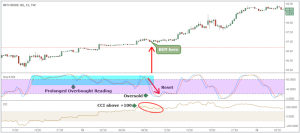
Commodities trading, a realm of high risk and potentially high reward, offers lucrative opportunities but demands a deep understanding of leverage. This guide unravels the complexities of using leverage in commodities trading, exploring various strategies, risk management techniques, and the impact of market volatility on your trading outcomes. From understanding the mechanics of leverage to developing a robust risk management plan, we aim to equip you with the knowledge to navigate this dynamic market effectively.
We’ll delve into the nuances of different commodity types – energy, metals, agriculture, and livestock – and how leverage application varies depending on the inherent volatility and market dynamics of each. Through illustrative examples, we’ll showcase both successful and unsuccessful leverage strategies, emphasizing the critical role of position sizing and risk mitigation in achieving sustainable success.
Introduction to Commodities Trading

Commodities trading involves the buying and selling of raw materials and primary agricultural products. It’s a global market influencing everything from the price of gasoline to the cost of a loaf of bread. Understanding the basics of this market is crucial for anyone interested in investing or simply comprehending the forces shaping the global economy. This section will Artikel the fundamental aspects of commodities trading, focusing on the types of commodities traded, the key players involved, and the interconnected nature of the global commodities markets.Commodities are broadly categorized into several groups, each with its own unique characteristics and market dynamics.
Commodity Types
Commodities are broadly classified into several key groups: energy, metals, agriculture, and livestock. Energy commodities encompass crude oil, natural gas, and refined petroleum products. These are essential for transportation, heating, and electricity generation, making their prices highly sensitive to global economic activity and geopolitical events. Metals include precious metals like gold and silver, which are often seen as safe haven assets during times of economic uncertainty, and industrial metals such as copper, aluminum, and iron ore, crucial for construction and manufacturing.
Agricultural commodities comprise crops like corn, wheat, soybeans, and coffee, their prices influenced by weather patterns, global demand, and government policies. Livestock, including cattle, hogs, and poultry, represent another significant commodity sector, with prices affected by factors such as feed costs, disease outbreaks, and consumer demand.
Market Participants
Several key players actively participate in the commodities markets, each with distinct roles and motivations. Producers, such as farmers, mining companies, and oil producers, are the primary suppliers of commodities. They often use the futures markets to hedge against price fluctuations, ensuring a stable income stream regardless of market volatility. Consumers, ranging from manufacturers to individuals, represent the demand side of the market.
They purchase commodities as inputs for production or for direct consumption. Speculators aim to profit from price movements, taking long or short positions based on their market outlook. Their participation adds liquidity to the market but can also amplify price volatility. Hedgers, including producers and consumers, use commodities markets to mitigate price risk. They enter into contracts to lock in prices for future deliveries, protecting themselves against unfavorable price changes.
Global Commodities Markets and Interconnectedness
The global commodities markets are highly interconnected. Price changes in one commodity can ripple through the entire system. For example, a drought affecting corn production can lead to higher corn prices, impacting the price of livestock feed and ultimately the price of meat. Similarly, a surge in oil prices can increase transportation costs, affecting the prices of other commodities.
This interconnectedness highlights the importance of understanding the broader market context when analyzing individual commodity prices. Geopolitical events, weather patterns, and economic growth all play significant roles in shaping the overall dynamics of the global commodities markets. Furthermore, government regulations and policies can also have a substantial impact on supply, demand, and ultimately pricing.
Understanding Leverage in Commodities Trading
Leverage is a powerful tool in commodities trading, allowing traders to control a larger position than their initial capital would normally permit. This magnification effect, however, works both ways: it significantly amplifies potential profits but equally increases the risk of substantial losses. Understanding how leverage functions is crucial for successful and responsible trading.Leverage essentially acts as a multiplier.
For instance, a 10:1 leverage ratio means that for every $1 of your own money, you can control $10 worth of commodities. This allows you to potentially profit from larger price movements, but it also means that even small adverse price shifts can quickly deplete your trading capital. The higher the leverage ratio, the greater the potential for both significant gains and devastating losses.
Leverage Ratios and Risk Management
Different leverage ratios present varying levels of risk. A lower leverage ratio, such as 2:1 or 5:1, implies less risk because your potential losses are limited to a smaller multiple of your initial investment. Conversely, a higher leverage ratio, such as 10:1 or even 20:1 (though less common for commodities), significantly increases your potential for both substantial profits and substantial losses.
Effective risk management necessitates carefully selecting a leverage ratio that aligns with your trading experience, risk tolerance, and trading strategy. For example, a novice trader might benefit from starting with a lower leverage ratio to gain experience and build confidence before gradually increasing it. Conversely, a seasoned trader with a well-defined risk management plan might opt for a higher leverage ratio to potentially maximize profits on anticipated price movements.
Leverage Mechanics with Different Trading Instruments
The mechanics of using leverage differ slightly depending on the trading instrument.Futures contracts inherently involve leverage. When trading futures, the initial margin requirement represents the amount of capital you need to secure a position. This margin acts as collateral, representing a fraction of the contract’s total value. Price movements in the underlying commodity directly impact your margin account.
If prices move against your position, your margin account balance may decrease, potentially triggering a margin call, requiring you to deposit additional funds to maintain your position.Options contracts also utilize leverage, but in a slightly different way. The premium paid for an option contract is significantly smaller than the potential value of the underlying commodity. This allows for leveraged exposure, but the maximum loss is limited to the premium paid.
This limited risk is a key difference compared to futures contracts.Exchange-Traded Funds (ETFs) tracking commodities usually do not offer direct leverage in the same way as futures or options. However, leveraged ETFs exist, designed to magnify the daily price movements of the underlying commodity index. These ETFs typically use derivatives and borrowing to achieve their leveraged returns.
It is crucial to understand that the daily compounding effect of leveraged ETFs can lead to significant losses over time even if the underlying commodity shows modest price decreases. For instance, a 2x leveraged ETF might lose 20% if the underlying index drops 10% in a day, leading to greater losses if the index drops further in subsequent days.
Leverage Strategies in Commodities Trading

Leverage, while amplifying potential profits in commodities trading, also significantly magnifies potential losses. Understanding and effectively employing various leverage strategies is crucial for successful trading. This section will explore different strategies, illustrate their application with examples, and emphasize the importance of risk management.
Comparison of Leverage Trading Strategies
Different trading strategies utilize leverage in unique ways, each with its own risk profile and time horizon. The table below compares four common approaches: long, short, scalping, and swing trading.
| Strategy | Time Horizon | Risk Profile | Leverage Use |
|---|---|---|---|
| Long | Days to years | Moderate to High (depending on market volatility and position size) | Leverage amplifies potential profits from anticipated price increases. Higher leverage increases profit potential but also loss potential. |
| Short | Days to years | Moderate to High (depending on market volatility and position size) | Leverage magnifies potential profits from anticipated price decreases. Higher leverage increases profit potential but also loss potential. |
| Scalping | Minutes to hours | High | High leverage is often employed to capitalize on small price fluctuations. Requires precise entry and exit points and rapid execution. |
| Swing Trading | Days to weeks | Moderate | Moderate leverage is typically used to capitalize on short-term price swings. Requires identifying support and resistance levels. |
Examples of Successful and Unsuccessful Leverage Trading Strategies
Understanding the outcomes of various strategies is crucial for learning.
Successful strategies often involve a combination of meticulous planning, risk management, and market analysis.
- Successful Example: A trader correctly anticipated a surge in natural gas prices due to a predicted cold winter. Using moderate leverage, they established a long position, benefiting significantly from the price increase. Their thorough market research and risk management plan limited their potential losses in case the prediction was inaccurate.
- Successful Example: A trader accurately predicted a decline in the price of coffee beans due to an oversupply. Employing a short position with careful leverage management, they profited from the price drop. They carefully monitored the market and adjusted their position as needed.
Unsuccessful strategies often highlight the dangers of inadequate risk management and poor market analysis.
- Unsuccessful Example: A trader used excessive leverage on a long position in crude oil, expecting a rapid price increase. However, geopolitical events unexpectedly caused a sharp price decline, resulting in significant losses that exceeded their trading capital.
- Unsuccessful Example: A scalper used high leverage to trade gold based on short-term price fluctuations. Due to unexpected market volatility and a lack of precise entry/exit points, they experienced numerous losing trades, quickly depleting their account.
Position Sizing and Risk Management with Leverage
Effective position sizing and risk management are paramount when employing leverage. Over-leveraging can quickly lead to substantial losses.
Position sizing involves determining the appropriate amount of capital to allocate to each trade. This should be carefully calculated based on your risk tolerance and the potential for loss. Risk management strategies, such as stop-loss orders, help to limit potential losses by automatically exiting a position when the price reaches a predetermined level.
Never risk more than you can afford to lose.
Diversification across different commodities and trading strategies can also help to mitigate risk. Thorough market analysis and a well-defined trading plan are essential components of a successful leverage trading strategy. Continuously monitoring market conditions and adjusting your positions as needed is crucial.
Risk Management with Leverage in Commodities Trading
Leverage significantly amplifies both profits and losses in commodities trading. While it offers the potential for substantial returns, it also introduces considerable risk. Effective risk management is therefore paramount for successful leverage trading, ensuring you protect your capital and avoid potentially devastating losses. This section will Artikel the key risks and provide practical strategies to mitigate them.
Key Risks Associated with Leverage in Commodities Trading
The inherent volatility of commodity markets, coupled with the magnifying effect of leverage, creates several significant risks. These risks, if not properly addressed, can lead to substantial financial losses or even the complete loss of invested capital. Understanding these risks is the first step towards effective risk management.
- Margin Calls: A margin call occurs when the value of your trading account falls below the broker’s required minimum margin level. This necessitates depositing additional funds to maintain your open positions. Failure to meet a margin call results in liquidation.
- Liquidation: If you fail to meet a margin call, your broker will forcibly close your positions to recover the outstanding margin. This typically happens at unfavorable market prices, leading to significant losses. The speed of liquidation can further exacerbate losses, especially during periods of high volatility.
- High Volatility: Commodity markets are known for their price swings, often influenced by geopolitical events, weather patterns, and supply-demand dynamics. Leverage amplifies these price fluctuations, meaning even small market movements can lead to substantial gains or losses in your leveraged positions. For example, a 5% price drop in a commodity can translate to a much larger percentage loss in a leveraged position.
Risk Management Techniques
Several strategies can effectively mitigate the risks associated with leverage in commodities trading. A well-defined risk management plan, incorporating these techniques, is crucial for long-term success.
- Stop-Loss Orders: Stop-loss orders automatically close your position when the market price reaches a predetermined level, limiting potential losses. These orders help to prevent substantial losses due to unexpected market movements. For example, a trader might set a stop-loss order to limit potential losses to 10% of their invested capital.
- Diversification: Diversifying your portfolio across different commodities reduces the impact of losses in any single commodity. By spreading your investments, you reduce your overall risk exposure. Instead of focusing solely on one commodity, a trader might invest in a basket of commodities such as gold, oil, and agricultural products.
- Hedging Strategies: Hedging involves using offsetting positions to mitigate risk. For instance, a farmer expecting to sell corn in the future might buy corn futures contracts to lock in a price, protecting against potential price declines before the harvest.
Developing a Robust Risk Management Plan
Creating a comprehensive risk management plan is a multi-step process that requires careful consideration and discipline. The following steps provide a framework for developing such a plan.
- Define Your Risk Tolerance: Determine the maximum amount of capital you are willing to lose in any given trade or period. This is crucial in setting appropriate position sizes and stop-loss levels.
- Set Position Sizing Limits: Calculate the appropriate position size for each trade based on your risk tolerance and the volatility of the specific commodity. This ensures that potential losses remain within your acceptable limits.
- Implement Stop-Loss Orders: For every trade, set a stop-loss order to automatically limit potential losses to a predefined level. Regularly review and adjust these orders as market conditions change.
- Diversify Your Portfolio: Spread your investments across various commodities to reduce overall risk. Consider the correlation between different commodities when constructing your portfolio.
- Monitor Your Positions Regularly: Keep a close eye on your positions and market conditions. Be prepared to adjust your strategy as needed based on changing market dynamics.
- Regularly Review and Adjust Your Plan: Your risk management plan should not be static. Regularly review and adjust it based on your trading performance, market conditions, and changes in your risk tolerance.
Leverage and Market Volatility in Commodities
Leverage amplifies both profits and losses in commodities trading. Therefore, understanding how market volatility interacts with leverage is crucial for successful trading. High volatility, characterized by significant price swings, can dramatically increase the risk associated with leveraged positions, potentially leading to substantial losses if not managed effectively. Conversely, periods of low volatility can limit the potential for large profits, even with leverage.Market volatility significantly impacts the effectiveness of leverage trading strategies.
In highly volatile markets, small price movements can quickly wipe out leveraged positions, requiring traders to closely monitor their trades and implement appropriate risk management techniques. Conversely, in less volatile markets, leverage might not offer the same potential for amplified returns, and the risk-reward ratio might become less favorable. The impact of volatility on leverage is not uniform across all commodities.
Commodity Volatility and Leverage Suitability
The volatility of different commodities varies considerably, influencing their suitability for leverage trading. For example, gold, often considered a safe haven asset, tends to exhibit lower volatility compared to agricultural commodities like corn or soybeans, which are highly susceptible to weather patterns and geopolitical events. Energy commodities, such as crude oil, are also known for their price fluctuations, influenced by global supply and demand dynamics and geopolitical factors.
Traders should carefully assess the historical volatility of a commodity before employing leverage. A commodity with consistently high volatility might necessitate a more conservative leverage approach, while a commodity with historically lower volatility could potentially support a higher leverage ratio. For instance, a trader might employ a lower leverage ratio when trading crude oil during periods of geopolitical uncertainty compared to a more stable period.
Adjusting Leverage Strategies Based on Volatility
Adapting leverage strategies based on changing market conditions and volatility is essential for risk management. Several methods can be employed. Traders can utilize volatility indicators, such as the Average True Range (ATR), to gauge market volatility. A rising ATR suggests increasing volatility, prompting a reduction in leverage. Conversely, a declining ATR might indicate a suitable opportunity to increase leverage, but only within a well-defined risk tolerance.
Furthermore, traders can incorporate stop-loss orders to limit potential losses. Stop-loss orders automatically exit a position when the price reaches a predetermined level, helping to mitigate the impact of sudden price swings. The placement of stop-loss orders should be adjusted based on the level of volatility, potentially widening the stop-loss during periods of heightened volatility. Finally, diversifying across different commodities with varying volatility profiles can help reduce overall portfolio risk.
This strategy mitigates the impact of significant losses in a single commodity by offsetting them with gains in other, less volatile assets. For example, a portfolio including gold and crude oil would benefit from the diversification effect, as the price movements of these commodities are not always correlated.
Mastering leverage in commodities trading requires a blend of knowledge, discipline, and a well-defined risk management strategy. While the potential for significant profits exists, the inherent risks necessitate a cautious and calculated approach. By understanding the intricacies of leverage, carefully selecting your trading strategies, and diligently managing risk, you can enhance your chances of success in this exciting yet challenging market.
Remember, thorough research, continuous learning, and a realistic assessment of your risk tolerance are crucial for long-term success in commodities trading.
FAQ Overview
What are the different types of commodities?
Commodities are broadly categorized into energy (oil, natural gas), metals (gold, silver, copper), agriculture (corn, wheat, soybeans), and livestock (cattle, hogs).
What is a margin call?
A margin call occurs when your account equity falls below the required margin level, prompting your broker to demand additional funds to maintain your open positions.
How does diversification reduce risk in leverage trading?
Diversification spreads your investment across different commodities, reducing the impact of losses in a single commodity on your overall portfolio.
What are stop-loss orders?
Stop-loss orders automatically sell your position when the price reaches a predetermined level, limiting potential losses.
Is leverage suitable for all traders?
No, leverage is a high-risk tool and is not suitable for all traders, especially those with limited experience or risk tolerance.