
The world of short-term commodity trading offers both significant potential rewards and considerable risks. Quick price fluctuations driven by global events, weather patterns, and geopolitical shifts create opportunities for astute traders to profit from short-term market movements. However, the speed and volatility of this market demand a deep understanding of technical analysis, risk management, and the specific characteristics of the commodities themselves.
This exploration delves into the key factors influencing short-term commodity prices and strategies for successful navigation of this dynamic environment.
Understanding the nuances of short-term trading, including identifying suitable commodities, employing effective technical analysis, and implementing robust risk management strategies, is paramount for achieving consistent profitability. This guide aims to equip you with the knowledge and insights necessary to confidently navigate this exciting yet challenging arena.
Factors Influencing Short-Term Commodity Prices
Short-term commodity price fluctuations are a complex interplay of various factors, often reacting swiftly to unexpected events. Understanding these influences is crucial for successful short-term trading strategies. While long-term trends might be shaped by broader economic forces, short-term movements are frequently driven by more immediate and volatile factors.
Global Economic Events and Commodity Prices
Global economic events significantly impact short-term commodity prices. A sudden recession in a major economy, for instance, can drastically reduce demand for raw materials, leading to price drops. Conversely, robust economic growth in multiple regions often boosts demand, pushing prices upward. The interconnectedness of the global economy means that even seemingly localized events can have ripple effects across commodity markets.
For example, a major financial crisis in one country could trigger a sell-off in commodities globally as investors seek safe haven assets. Similarly, unexpected changes in interest rates by central banks can influence the value of the dollar, which in turn affects the prices of dollar-denominated commodities.
Weather Patterns and Seasonal Changes
Weather patterns and seasonal changes are powerful drivers of short-term commodity price volatility, particularly for agricultural commodities. Unexpected droughts, floods, or extreme temperatures can severely impact crop yields, leading to immediate price spikes. Conversely, unusually favorable weather conditions can result in abundant harvests, causing prices to fall. Seasonal variations also play a role; for instance, the price of natural gas tends to fluctuate based on heating demands during winter months.
The impact of these factors is often localized, affecting specific regions and commodities more acutely. For example, a severe frost in a major coffee-producing region could lead to a sharp increase in coffee prices globally.
Geopolitical Factors and Commodity Price Movements
Geopolitical events can significantly influence short-term commodity price movements. Political instability in major producing regions, such as conflicts or sanctions, can disrupt supply chains and lead to price increases. Changes in government policies, trade agreements, or international relations can also impact prices. For example, an embargo on oil exports from a specific country can create a supply shortage, pushing oil prices higher.
Conversely, the easing of trade tensions between countries can lead to increased trade and lower prices for affected commodities. The anticipation of such events can also drive price movements, even before they materialize. Consider the impact of anticipated sanctions on a key commodity exporter; the market may react weeks or even months in advance.
Examples of Specific Events and Their Impact
The 2008 global financial crisis led to a sharp decline in commodity prices across the board as demand plummeted. The 2011 Japanese earthquake and tsunami disrupted supply chains for various commodities, resulting in temporary price spikes. The ongoing war in Ukraine has significantly impacted global energy and agricultural commodity prices due to disruptions in supply and export routes.
Similarly, the OPEC+ decision to cut oil production in 2022 led to a substantial increase in oil prices. These examples highlight the sensitivity of commodity markets to global events and the importance of monitoring geopolitical and economic news.
Technical Analysis for Short-Term Commodity Trading
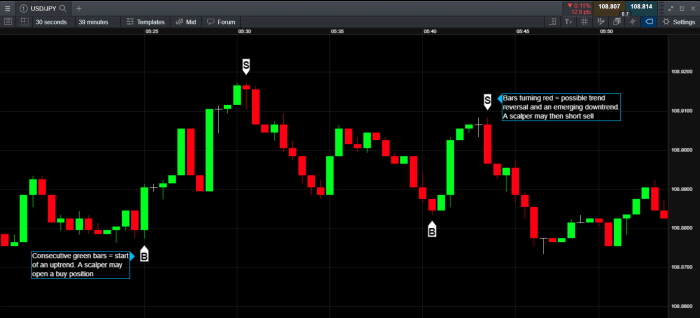
Technical analysis is a crucial tool for short-term commodity traders, providing insights into price movements based on historical data. Unlike fundamental analysis, which focuses on economic factors, technical analysis uses charts and indicators to identify trends, support and resistance levels, and potential entry and exit points. Successful short-term trading often hinges on the ability to accurately interpret these technical signals and react swiftly to market changes.
Common Technical Indicators
Several technical indicators are frequently employed in short-term commodity trading to gauge momentum, trend strength, and potential reversals. These indicators help traders filter noise from price charts and identify high-probability trading opportunities.
- Moving Averages: Moving averages smooth out price fluctuations, revealing underlying trends. Simple Moving Averages (SMAs) and Exponential Moving Averages (EMAs) are commonly used. A bullish crossover occurs when a shorter-period MA crosses above a longer-period MA, suggesting a potential uptrend. Conversely, a bearish crossover signals a potential downtrend. For example, a trader might use a 10-day SMA and a 20-day SMA; a crossover above would be considered bullish.
- Relative Strength Index (RSI): RSI measures the magnitude of recent price changes to evaluate overbought or oversold conditions. Readings above 70 generally indicate an overbought market, suggesting a potential price correction or reversal. Readings below 30 suggest an oversold market, hinting at a possible price rebound. A divergence between price and RSI can also be a valuable signal. For instance, if the price makes a new high but the RSI fails to do so, it may indicate a weakening uptrend.
- Moving Average Convergence Divergence (MACD): MACD is a trend-following momentum indicator that shows the relationship between two moving averages. The MACD line crossing above its signal line is a bullish signal, while a crossover below is bearish. MACD histograms can also provide insights into momentum strength. For example, a strong bullish signal might be indicated by the MACD line crossing above the signal line while the histogram is also positive and expanding.
Candlestick Pattern Interpretation
Candlestick patterns provide visual representations of price action over a specific period, revealing information about buyer and seller pressure. Recognizing these patterns can help anticipate potential price movements.
- Bullish Engulfing Pattern: This pattern consists of a bearish candle followed by a bullish candle that completely engulfs the previous candle’s body. It signals a potential shift in momentum from bearish to bullish.
- Bearish Engulfing Pattern: The opposite of the bullish engulfing pattern, this involves a bullish candle followed by a bearish candle that completely engulfs the previous candle’s body, suggesting a potential shift from bullish to bearish.
- Hammer: A small body candle with a long lower wick, indicating strong buying pressure near the low of the period. It’s a bullish reversal pattern.
- Hanging Man: Similar to a hammer but considered bearish, it suggests potential selling pressure near the high of the period.
Understanding these patterns, along with others, provides valuable context for interpreting price action. For example, a hammer appearing at a significant support level could be a strong bullish signal.
Step-by-Step Guide for Using Technical Analysis
Utilizing technical analysis effectively requires a structured approach to identify entry and exit points. A systematic process minimizes emotional decision-making and enhances trading consistency.
- Identify the Trend: Determine the overall trend of the commodity using moving averages or other trend-following indicators. Is it an uptrend, downtrend, or sideways trend?
- Locate Support and Resistance Levels: Identify key support and resistance levels on the chart. These levels often act as barriers to price movement.
- Select Indicators: Choose appropriate technical indicators based on your trading style and the commodity’s characteristics. Consider RSI, MACD, and moving averages.
- Identify Entry Signals: Look for bullish confirmation signals (e.g., MACD crossover, RSI oversold, bullish candlestick patterns) near support levels for long positions, and bearish signals (e.g., MACD crossover, RSI overbought, bearish candlestick patterns) near resistance levels for short positions.
- Set Stop-Loss Orders: Always place a stop-loss order to limit potential losses. This order automatically sells your position if the price falls below a predetermined level.
- Determine Take-Profit Levels: Define your take-profit levels based on your risk tolerance and the potential reward. These levels specify when to exit a trade to secure profits.
- Monitor and Manage Trades: Continuously monitor your trades and adjust your stop-loss and take-profit levels as needed, based on changing market conditions. Trailing stop-loss orders can help protect profits as the price moves in your favor.
Risk Management in Short-Term Commodity Trading
Short-term commodity trading, while offering the potential for quick profits, is inherently risky. The volatile nature of commodity markets necessitates a robust risk management strategy to protect capital and ensure long-term trading success. This section will explore key risk management techniques, emphasizing the importance of proactive measures to mitigate potential losses.
Stop-Loss Orders and Position Sizing
Stop-loss orders are crucial for limiting potential losses on individual trades. A stop-loss order automatically sells a commodity when its price falls to a predetermined level, preventing further losses from accumulating. Effective stop-loss placement requires careful consideration of price volatility and the trader’s risk tolerance. Position sizing, determining the quantity of a commodity to trade, is equally vital.
It involves calculating the appropriate trade size based on available capital and the risk tolerance per trade. For instance, a trader might risk only 1% to 2% of their trading capital on any single trade, regardless of the expected profit. This limits the potential damage from a losing trade.
Diversification to Mitigate Risk
Diversification across different commodities is a cornerstone of effective risk management. By spreading investments across various commodities (e.g., gold, oil, agricultural products), traders reduce their dependence on the performance of any single market. This approach helps to cushion the impact of negative price movements in one commodity by offsetting potential losses with gains in others. For example, a portfolio holding both gold and oil might benefit from periods of economic uncertainty where gold tends to rise, while oil might fall, and vice-versa in different market scenarios.
Controlling Emotions and Avoiding Impulsive Decisions
Emotional discipline is paramount in short-term commodity trading. Fear and greed can lead to impulsive decisions that compromise trading plans and increase risk. Developing a structured trading plan, adhering to pre-defined risk parameters, and maintaining a detached, analytical approach are essential for mitigating the impact of emotions. Keeping a trading journal, regularly reviewing past trades, and noting emotional responses can be beneficial for identifying patterns and improving emotional control over time.
Margin and Leverage: Impact on Risk
Margin and leverage are integral aspects of commodity trading, but they significantly amplify both profits and losses. Margin trading allows traders to control larger positions with a smaller initial investment, magnifying potential returns. However, this magnification also increases the risk of substantial losses if the market moves against the trader’s position. Leverage acts as a multiplier, increasing the size of the trade relative to the initial investment.
Therefore, understanding and carefully managing leverage is crucial for controlling risk in short-term commodity trading. A prudent approach would involve utilizing leverage judiciously, only when the risk-reward ratio is favorable and the trader has a clear understanding of the potential consequences of adverse price movements. For example, a 10:1 leverage on a $1000 investment allows control of a $10,000 position, significantly increasing both potential profit and loss.
Commodities Trading
Commodities trading involves the buying and selling of raw materials and primary agricultural products. This market is vast and complex, encompassing a wide range of assets and trading strategies, influenced by global economic conditions, geopolitical events, and supply and demand dynamics. Understanding the various facets of this market is crucial for successful participation.Commodities trading encompasses a diverse range of assets categorized into several key groups, each with its own unique characteristics and market drivers.
Commodity Types
The commodities market is broadly segmented into energy, metals, agricultural products, and livestock. Energy commodities include crude oil, natural gas, and heating oil, whose prices are significantly impacted by global production levels, geopolitical stability, and seasonal demand. Metals, such as gold, silver, copper, and platinum, are often seen as safe haven assets and their prices fluctuate based on industrial demand, investment flows, and currency movements.
Agricultural commodities, like corn, soybeans, wheat, coffee, and sugar, are influenced by weather patterns, crop yields, and global food security concerns. Livestock, including cattle and hogs, are subject to similar factors as agricultural commodities, with added considerations of animal health and feed costs.
Exchanges and Brokers
Commodities are primarily traded on organized exchanges, providing a centralized platform for buyers and sellers to interact. These exchanges establish standardized contracts, ensuring transparency and liquidity. Examples include the Chicago Mercantile Exchange (CME Group), the Intercontinental Exchange (ICE), and the London Metal Exchange (LME). Brokers act as intermediaries, facilitating transactions between buyers and sellers, offering research, analysis, and risk management tools.
They provide access to the exchange and execute trades on behalf of their clients.
Regulatory Landscape
The commodities trading landscape is subject to a complex web of regulations designed to protect investors and maintain market integrity. These regulations vary by jurisdiction but generally aim to prevent market manipulation, ensure transparency, and manage risk. Key regulatory bodies include the Commodity Futures Trading Commission (CFTC) in the United States, the European Securities and Markets Authority (ESMA) in Europe, and various other national and regional regulatory agencies.
These bodies oversee trading practices, set margin requirements, and monitor market activity to prevent fraud and manipulation. Compliance with these regulations is paramount for all participants in the commodities market. Failure to comply can result in significant penalties.
Illustrative Example of a Short-Term Trade
This section details a hypothetical short-term trade in natural gas futures, illustrating the decision-making process, technical analysis employed, risk management strategies, and potential outcomes. The example is for illustrative purposes only and does not constitute financial advice.The following example demonstrates a short-term trade in natural gas futures, highlighting the interplay between technical analysis and risk management.
Trade Setup: Natural Gas Futures
Our hypothetical trader observes a bearish candlestick pattern forming on the natural gas futures chart (e.g., a bearish engulfing pattern or a dark cloud cover). This pattern, coupled with weakening RSI (Relative Strength Index) readings below 30 and a bearish divergence between price and the RSI, suggests a potential short-term price decline. Furthermore, the trader notes recent negative news regarding natural gas supply exceeding demand, reinforcing the bearish outlook.
The trader plans to execute a short trade at the next available opportunity.
Technical Analysis and Entry Point
1. Chart Pattern
A bearish engulfing pattern is identified on the hourly chart. This pattern shows a smaller bullish candle followed by a larger bearish candle that completely engulfs the previous one. This suggests a shift in momentum from bullish to bearish.
2. RSI Indicator
The RSI is below 30, indicating oversold conditions. However, the trader acknowledges that oversold conditions do not guarantee a price reversal; it simply suggests potential for a short-term bounce before further decline.
3. News and Fundamentals
Reports of increased natural gas production and milder-than-expected weather forecasts add weight to the bearish outlook. This fundamental analysis supports the technical indicators.
4. Entry Point
The trader decides to enter a short position at the opening price of the next trading day, just above the low of the engulfing pattern, placing a stop-loss order above the high of the engulfing candle to limit potential losses.
Risk Management Strategy
1. Stop-Loss Order
A stop-loss order is placed above the high of the engulfing candlestick pattern, limiting potential losses to a predetermined amount. This strategy aims to prevent significant losses if the trade moves against the trader’s expectations. The stop-loss level is calculated to represent a risk of approximately 2% of the trader’s trading capital.
2. Position Sizing
The trader carefully sizes the position to align with their risk tolerance. This ensures that even if the trade is unsuccessful, the loss remains within acceptable parameters. The position size is determined to be 1 contract, which is 10,000 MMBtu of natural gas.
3. Take-Profit Order
A take-profit order is placed at a level representing a potential profit target of 1.5 times the stop-loss distance. This order will automatically close the short position once the profit target is reached.
Trade Outcome
The trade plays out as expected. The price of natural gas declines as predicted, reaching the take-profit level within the next 24-48 hours. The trader successfully closes their short position, securing a profit that is 1.5 times their initial risk. However, it is important to note that alternative scenarios exist, such as the price bouncing back above the stop-loss order, resulting in a small loss, or the price not reaching the take-profit target in the timeframe, resulting in a smaller profit or even closing the trade before the target for other reasons.
The trader is prepared for all outcomes and manages risk appropriately.
Successfully trading commodities in the short term hinges on a multifaceted approach. Identifying commodities with high liquidity and volatility, coupled with a mastery of technical analysis and disciplined risk management, forms the bedrock of a successful strategy. While potential profits are enticing, the inherent volatility necessitates careful planning and execution. By understanding the influences of global events, weather patterns, and geopolitical factors, and by consistently applying sound trading principles, traders can position themselves to capitalize on short-term opportunities while mitigating potential losses.
Remember that thorough research and a commitment to continuous learning are essential for long-term success in this dynamic market.
Helpful Answers
What are the typical transaction costs associated with short-term commodity trading?
Transaction costs vary depending on the broker, the commodity, and the trading volume. They typically include commissions, fees, and slippage.
How can I find reliable real-time commodity price data?
Reliable real-time data is available through reputable financial data providers, brokerage platforms, and financial news websites. It’s crucial to use multiple sources to ensure accuracy.
What are some common mistakes beginners make in short-term commodity trading?
Common mistakes include neglecting risk management, overtrading, emotional decision-making, and a lack of proper research and understanding of the market.
Are there any educational resources available for learning more about short-term commodity trading?
Many online courses, books, and webinars provide educational resources. However, it is crucial to vet these resources carefully and to prioritize those from reputable sources.


